 Save
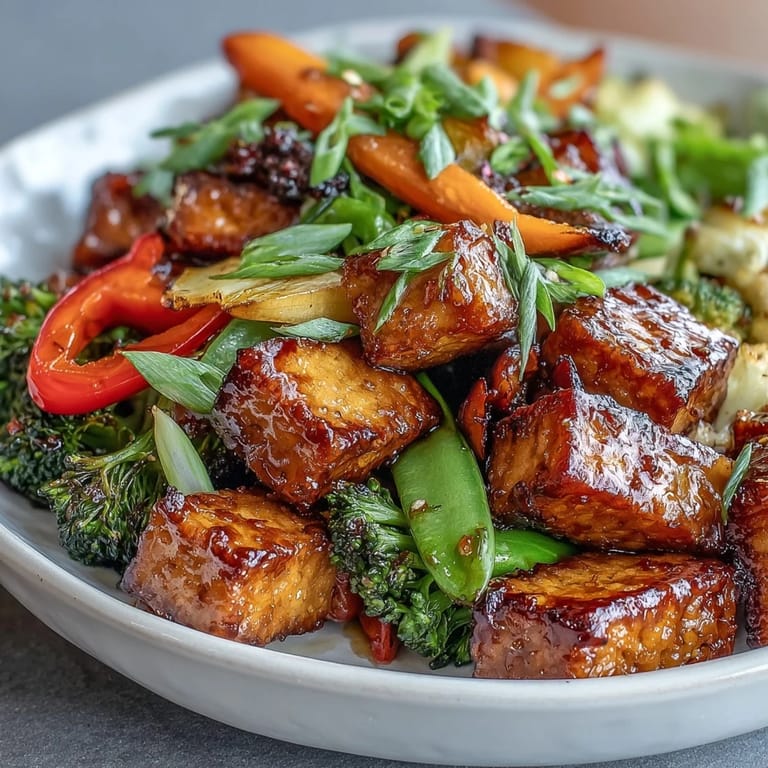
Save My wok sat unused for months until a friend mentioned she'd gone vegetarian and couldn't eat at her favorite takeout spot anymore. That weekend, I decided to experiment with tempeh—something I'd always been curious about but slightly intimidated by—and discovered that its nutty, almost tofu-like texture becomes absolutely golden and crispy when you give it proper attention in a hot pan. What started as a favor turned into my go-to weeknight dinner, the kind of meal that tastes like you've ordered takeout but costs a fraction of the price and takes barely longer than deciding what to watch.
I made this for my partner's family dinner last spring, nervous because their skepticism about anything meatless was pretty vocal. Watching their faces light up when they tasted how satisfying and flavorful it was—how the tempeh had actual substance and crunch, how the vegetables still had snap—was genuinely one of those quiet victories that reminds you why you bother cooking from scratch.
Ingredients
- Tempeh, cut into 1 cm cubes (250 g): This fermented soy product has a firmer, earthier flavor than tofu and crisps up beautifully when cubed small enough to maximize surface area in the pan.
- Red bell pepper, sliced (1): Sweet and slightly fruity, it adds both visual brightness and subtle sweetness that balances the savory sauce.
- Yellow bell pepper, sliced (1): A touch mellower than red, it rounds out the visual spectrum and prevents the stir-fry from tasting one-note.
- Medium carrot, julienned (1): Cut into thin matchsticks so it cooks through quickly without turning mushy, adding natural sweetness and that satisfying crunch.
- Sugar snap peas, trimmed (100 g): These stay crisp even after cooking briefly and add a fresh, almost tender snap that's essential to good stir-fry texture.
- Broccoli florets (100 g): Cut small so they cook evenly; they provide earthiness and that slight bitterness that makes the sauce taste more complex.
- Spring onions, sliced (2): Added at the very end to keep their freshness and onion bite from getting lost in cooking.
- Garlic, minced (2 cloves): The foundation of everything good in this dish—bloom it in oil for just 30 seconds so it's fragrant but never bitter.
- Fresh ginger, peeled and minced (2 cm piece): This gives the whole stir-fry a warming lift and subtle heat that makes it feel special without any chili needed.
- Soy sauce (3 tbsp): The umami backbone; use tamari if you need gluten-free, though the flavor is subtly different and slightly lighter.
- Water (2 tbsp): Keeps the sauce from becoming too concentrated and allows the cornstarch to thicken it evenly.
- Rice vinegar (1 tbsp): Adds brightness and keeps the sauce from feeling heavy; it cuts through the richness of the sesame oil.
- Maple syrup or agave nectar (1 tbsp): A touch of sweetness that rounds out the sauce profile without making it taste like a dessert.
- Toasted sesame oil (1 tsp): Use sparingly—this is potent and aromatic, added to the sauce rather than for cooking so it doesn't burn.
- Cornstarch (1 tsp): The secret to sauce that clings to vegetables and tempeh instead of pooling at the bottom of the wok.
- Vegetable oil for cooking (2 tbsp): High smoke point oil keeps the tempeh and aromatics from burning during the high-heat cooking this dish demands.
- Toasted sesame seeds for garnish (1 tbsp, optional): A finishing touch that adds nuttiness and visual texture.
- Fresh coriander or cilantro leaves (optional): If you like it, a bright herbal note that feels restaurant-quality in the best way.
Tired of Takeout? 🥡
Get 10 meals you can make faster than delivery arrives. Seriously.
One email. No spam. Unsubscribe anytime.
Instructions
- Whisk together your sauce:
- In a small bowl, combine soy sauce, water, rice vinegar, maple syrup, sesame oil, and cornstarch, stirring until the cornstarch dissolves completely. This is your secret weapon—prepping it now means you won't be fumbling while your wok screams for attention.
- Get the tempeh golden:
- Heat 1 tablespoon of oil in your largest wok or skillet over medium-high heat until it's visibly shimmering, then add tempeh cubes in a single layer. Don't stir constantly; let them sit for a minute or two so they develop golden, crispy edges before you toss them around for another 3–4 minutes total. You want them to look almost like tiny golden croutons.
- Toast your aromatics:
- Push the tempeh to the side, add the remaining oil if needed, then add garlic and ginger. Stir for just 30 seconds—you're looking for that moment when the kitchen suddenly smells incredible but nothing's turned brown yet.
- Cook the vegetables with intention:
- Add bell peppers, carrot, sugar snap peas, and broccoli all at once, then stir-fry for 4–5 minutes, keeping everything moving so each piece gets kissed by the hot pan. The vegetables should still have snap when you bite them, not be soft.
- Bring it all together:
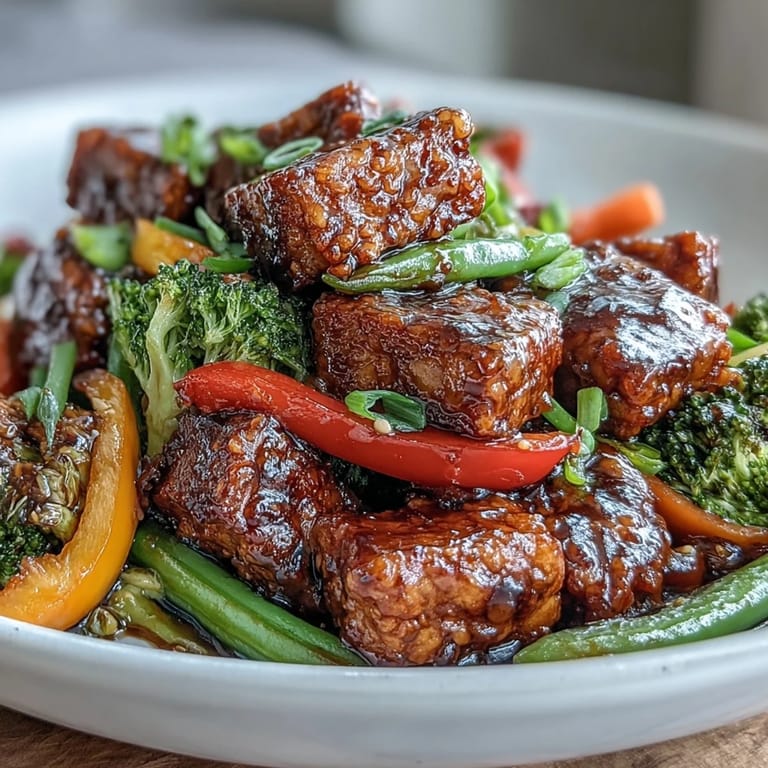
- Return the tempeh to the wok, give your sauce bowl a quick stir to redistribute any cornstarch that's settled, then pour it in. Toss everything constantly for 1–2 minutes until the sauce thickens slightly and coats everything in a glossy sheen.
- Finish and serve:
- Remove from heat, scatter spring onions over the top, then add sesame seeds and cilantro if you're using them. Serve immediately over rice or noodles while everything's still hot and the vegetables haven't lost their snap.
 Save
Save There's a specific moment in stir-frying where you stop thinking and just move with the rhythm of the pan—when the sizzle becomes almost meditative and you realize why this cooking method has been perfected over centuries. The first time I hit that zone with this recipe, I understood why someone would choose to eat this way not out of restriction but pure enjoyment.
The Tempeh Secret
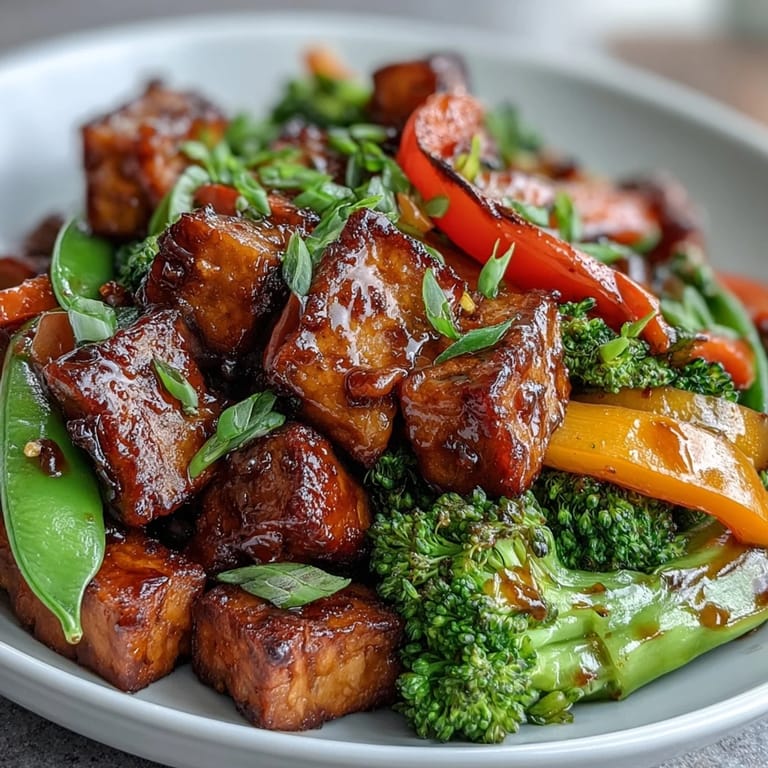
Tempeh deserves respect, which means giving it its own moment in the pan before everything else joins the party. Most people either skip the initial cooking step or rush it, which results in tempeh that stays pale and chewy instead of developing those crucial golden, slightly crispy edges that make this dish actually interesting. When you let it sit undisturbed for a minute, something magical happens—the exterior develops a subtle crispness while the interior stays tender and nutty-flavored.
Vegetable Timing Matters
The reason to add all the vegetables at once isn't laziness—it's because they cook at different rates and will actually finish at roughly the same time if you've cut them properly. The carrot matchsticks and broccoli florets need those full 4–5 minutes to become tender, while the bell peppers would turn mushy if given that long alone, but together they balance out perfectly. It's the kind of little geometry problem that makes cooking less about following orders and more about understanding how things work.
Make It Your Own
This recipe is genuinely a framework rather than a rigid rulebook, which is part of why I keep making it—there's room for your mood and whatever vegetables are looking good at the market. Mushrooms add umami and earthiness, baby corn brings sweetness and visual pop, zucchini works if you cut it thin enough, and snap beans add a different kind of crunch. If you want more heat, skip the maple syrup bump and instead add a teaspoon or two of sriracha or chili flakes directly to the sauce, or whisk in a tiny bit of white miso for deeper savory notes.
- Swap out up to half the vegetables based on season, but keep at least one or two that have natural sweetness to balance the savory sauce.
- If you don't have sesame oil, don't skip it and don't substitute with regular oil—it's worth a special trip because that aromatics payoff is real.
- Rice or noodles are more than a side here; they catch the extra sauce that drips off and become part of the whole experience.
 Save
Save This meal sits somewhere between weeknight practicality and the kind of food that genuinely satisfies you, which is where the best cooking lives. Once you nail it a couple times, it becomes the recipe you make when someone asks what you're cooking and you want to sound impressive without spending hours in the kitchen.
Recipe FAQs
- → What vegetables work best in this stir-fry?
Bell peppers, carrots, sugar snap peas, and broccoli provide great texture and color. You can easily swap in seasonal vegetables like mushrooms, baby corn, zucchini, or snow peas based on preference and availability.
- → How do I prepare tempeh for stir-frying?
Cut tempeh into 1 cm cubes for even cooking. Pan-fry in hot oil for 4–5 minutes until golden and crispy on all sides. This creates a nutty flavor and satisfying texture that absorbs the savory sauce beautifully.
- → Can I make this dish gluten-free?
Yes, simply substitute regular soy sauce with tamari, which is naturally gluten-free. All other ingredients including tempeh, vegetables, and the remaining sauce components are naturally gluten-free.
- → What should I serve with vegetable tempeh stir-fry?
Steamed jasmine rice, brown rice, or soba noodles make excellent accompaniments. The stir-fry also works well over quinoa or rice noodles for a complete, satisfying meal.
- → How long does the stir-fry keep in the refrigerator?
Store leftovers in an airtight container for up to 3–4 days. Reheat gently in a skillet or microwave, adding a splash of water if needed to refresh the sauce. The tempeh and vegetables will maintain their texture well.
- → How can I add more spice to the dish?
Add red pepper flakes, fresh chili slices, or a splash of sriracha to the sauce mixture. You can also stir-fry a diced chili pepper with the garlic and ginger for building heat from the base.