 Save
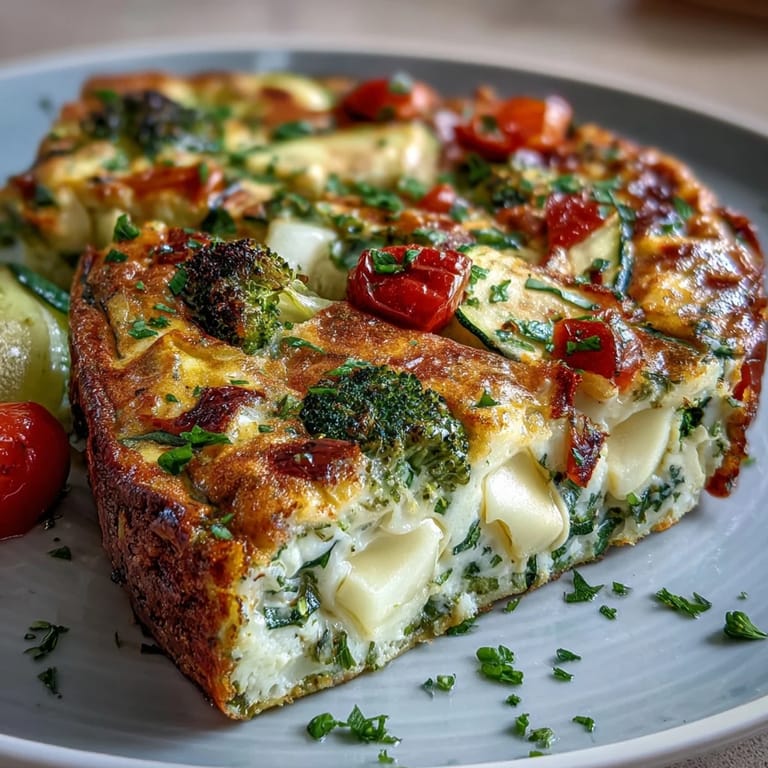
Save My neighbor knocked on my door one Sunday morning with a basket of vegetables from her garden, insisting I do something with them before they wilted. I had eggs, cheese, and about twenty minutes before guests arrived, so I threw together what would become my go-to frittata. The smell of that olive oil hitting the pan, followed by the sizzle of fresh broccoli, told me I was onto something real.
I made this for a group of friends who showed up unannounced on a Tuesday evening, and what could have been awkward actually turned into one of those perfect moments where everyone stood around the kitchen island picking at warm slices straight from the pan. Someone asked for the recipe, then someone else did, and suddenly I realized this simple dish had become something I made constantly.
Ingredients
- Broccoli florets, chopped: About 1 cup raw—they'll soften as they cook and add a lovely texture that doesn't disappear into mush.
- Red bell pepper, diced: One medium pepper gives brightness and slight sweetness; the color matters because you eat with your eyes first.
- Zucchini, sliced: One small one keeps things light and adds moisture without making the frittata soggy if you don't crowd the pan.
- Cherry tomatoes, halved: A half cup bursts during cooking and creates little pockets of flavor that surprise you with each bite.
- Red onion, thinly sliced: One small onion provides a sharp edge that balances the richness of eggs and cheese beautifully.
- Large eggs: Six of them are your foundation—make sure they're room temperature if you want them to cook evenly.
- Whole milk or dairy-free alternative: A quarter cup makes the eggs custard-like instead of dense, though I've skipped it in a pinch.
- Shredded cheddar cheese: One cup gives you that creamy, slightly tangy element, though feta works if you want something brighter and more crumbly.
- Fresh parsley, chopped: Two tablespoons, or one teaspoon dried—it's not essential but it catches light and makes the finished dish look intentional.
- Salt, black pepper, and dried oregano: The holy trio that prevents the frittata from tasting like scrambled eggs in a vegetable soup.
- Olive oil: Two tablespoons for sautéing, and use something you actually enjoy tasting because it matters here.
Tired of Takeout? 🥡
Get 10 meals you can make faster than delivery arrives. Seriously.
One email. No spam. Unsubscribe anytime.
Instructions
- Heat your oven and prepare the skillet:
- Set your oven to 375°F while you get a 10-inch oven-safe skillet heating over medium with the olive oil. You'll know it's ready when the oil shimmers and moves easily when you tilt the pan.
- Sauté the hearty vegetables first:
- Add broccoli, bell pepper, zucchini, and red onion to the hot oil and cook for 4 to 5 minutes, stirring occasionally. You want them softened but not collapsed—listen for that gentle sizzle to quiet down slightly, which means they're losing their raw edge.
- Add the tomatoes briefly:
- Stir in the cherry tomatoes and give it just one more minute on the heat. The tomatoes should look like they're starting to soften, not like they've surrendered completely.
- Combine your egg mixture in a bowl:
- Whisk together the eggs, milk, salt, pepper, oregano, and parsley in a separate bowl until the mixture looks pale and frothy. This is where you're building the structure that will hold everything together.
- Pour and layer:
- Pour the egg mixture slowly over the vegetables in the skillet, tilting gently so it settles evenly around everything. Scatter the cheese across the top in an even layer, letting some fall into crevices where it'll melt into pockets.
- Start cooking on the stovetop:
- Let the skillet sit on medium heat for 2 to 3 minutes—you'll see the edges start to set while the center stays jiggly. This is the moment before the oven takes over.
- Transfer to the oven:
- Slide the entire skillet into the preheated oven and bake for 15 to 18 minutes, until the center barely jiggles when you shake the pan gently and the top has turned a light golden color. You're looking for just-set, not overcooked.
- Cool and serve:
- Let it rest for 5 minutes out of the oven—this helps it hold together when you slice. Serve it warm, room temperature, or even cold the next day if there's any left.
 Save
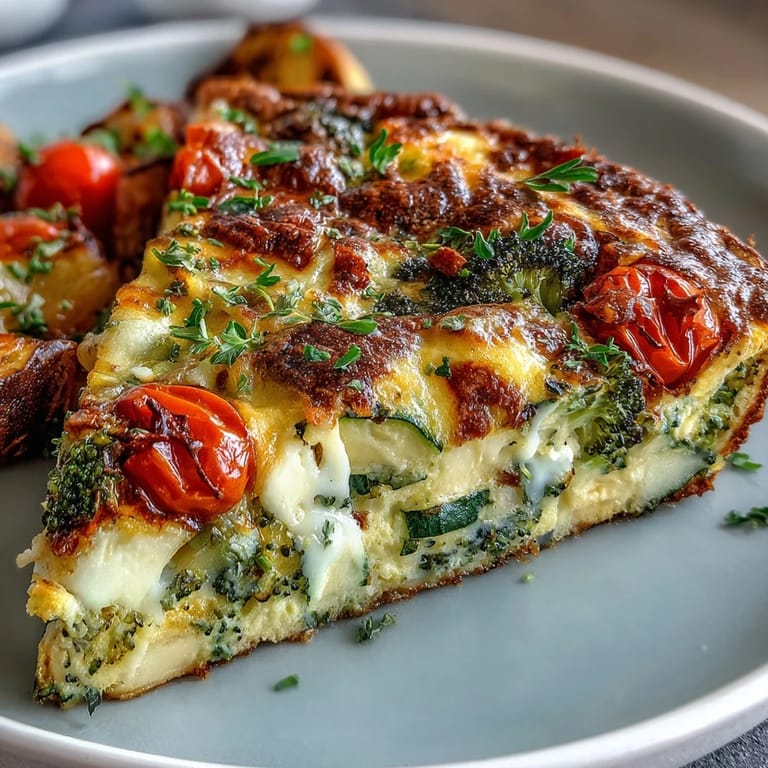
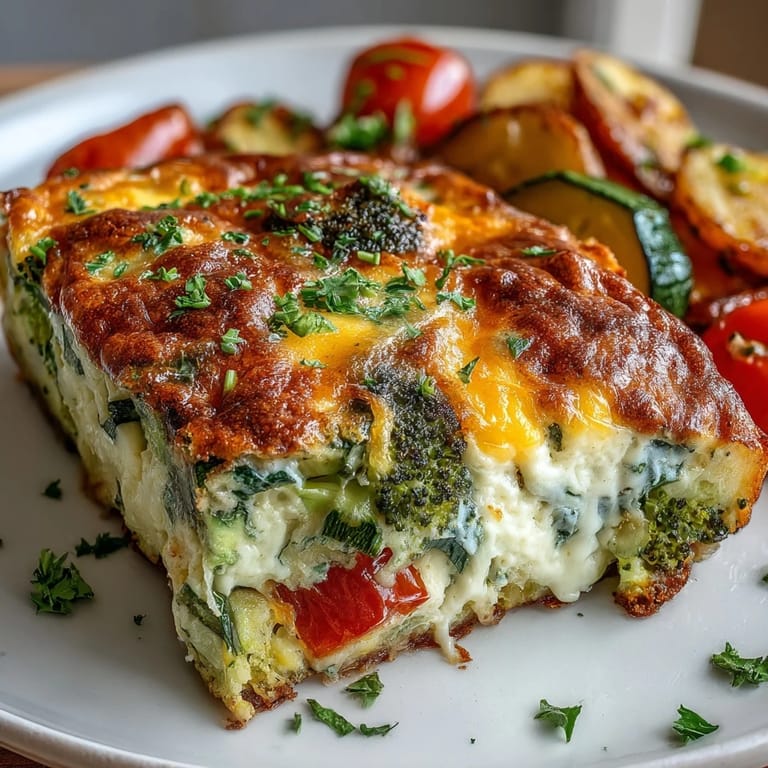
Save What I love most is when someone cuts into a slice and the cheese pulls in those thin, delicate strings, and you can see how the vegetables stayed distinct instead of becoming some anonymous mush. That's when you know you've nailed it.
Seasonal Swaps That Keep Things Fresh
I've made this frittata in every season and it shifts with what's available. Spring calls for asparagus and fresh peas, summer demands lots of zucchini and heirloom tomatoes, fall brings mushrooms and spinach, and winter is when I lean on frozen broccoli and whatever robust greens I can find. The technique never changes, but the personality of the dish transforms completely.
When Dietary Needs Come Into Play
I've made dairy-free versions for friends and honestly, good quality plant-based cheese has gotten so much better that most people don't notice the difference. The frittata stays just as creamy if you use a full-fat coconut milk or oat milk, and the vegetables carry enough flavor that you don't miss what's not there. I've also made it with almond flour sprinkled on top instead of cheese when someone needed to avoid dairy entirely, and it became its own delicious thing.
Making It Your Own at the Table
Some of my favorite moments with this dish happen after it's cooked—plating it with a simple green salad, a slice of crusty bread to catch the creamy centers, maybe a glass of crisp white wine if it's that kind of night. I learned early on that frittata is humble enough to let other things shine, but confident enough to stand completely on its own. The way you finish it matters almost as much as how you make it.
- A squeeze of fresh lemon juice over a warm slice brings brightness that cuts through the richness perfectly.
- Cracked fleur de sel sprinkled on top just before serving adds a texture and salt pop that regular salt can't match.
- Serve it at room temperature on a picnic or packed lunch, and it's somehow even better than when it was hot.
 Save
Save This frittata has become my answer to the question I ask myself most days: what can I make with what I have right now? It's taught me that the best recipes are the ones that bend with you, not against you.
Recipe FAQs
- → Can I make this dairy-free?
Yes, substitute whole milk with your favorite plant-based milk like almond or oat milk. For the cheese, either omit entirely or use a vegan cheese alternative that melts well.
- → What vegetables work best in frittatas?
Broccoli, bell peppers, zucchini, spinach, mushrooms, asparagus, and cherry tomatoes all work beautifully. Just be sure to sauté watery vegetables like zucchini and tomatoes briefly to prevent excess moisture.
- → How do I know when the frittata is done?
The edges should be golden and set, while the center should be firm with just a slight jiggle. A knife inserted into the center should come out clean. The internal temperature should reach 160°F.
- → Can I prepare this ahead of time?
Absolutely. Frittata tastes wonderful at room temperature and actually improves in flavor after sitting. You can make it up to 24 hours ahead and serve cold, room temperature, or gently reheated.
- → What size skillet should I use?
A 10-inch oven-safe skillet works perfectly for this quantity. Using a smaller skillet will make the frittata too thick and require longer baking time, while a larger pan creates a thinner frittata that may overcook.