 Save
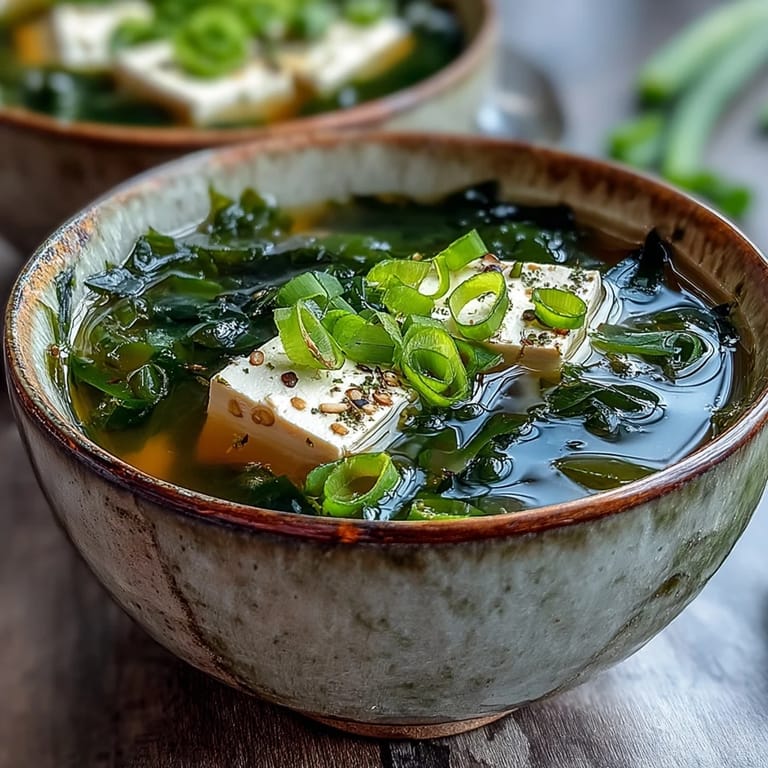
Save There's a quiet morning I return to often—standing in my kitchen with steam rising from a small pot, the aroma of dashi filling the air before anything else was even awake. My grandmother had shown me this soup years ago, not with measurements but with the kind of watching that teaches you rhythm instead of rules. Miso soup became my anchor, the thing I'd make when everything felt uncertain or when I simply needed five minutes of peace before the day started. It's barely a recipe, really—more like a ritual that happens to be delicious.
I made this for my roommate during her first week in a new city, when homesickness hit harder than she expected. She'd mentioned missing something warm and simple from her childhood. Watching her shoulders drop as she brought the bowl close and breathed in—that's when I understood this soup isn't about the ingredients, it's about creating a small moment of belonging in someone's day.
Ingredients
- Dashi stock (4 cups): The foundation of everything here—use vegetarian dashi made from kombu and shiitake if you're plant-based, and don't skip making it fresh if you have time, though quality store-bought versions work beautifully too.
- White or yellow miso paste (3 tablespoons): This is your flavor anchor, rich and umami-forward but gentle enough not to overpower; I've learned to dissolve it separately rather than dump it straight in, which protects those beneficial probiotics.
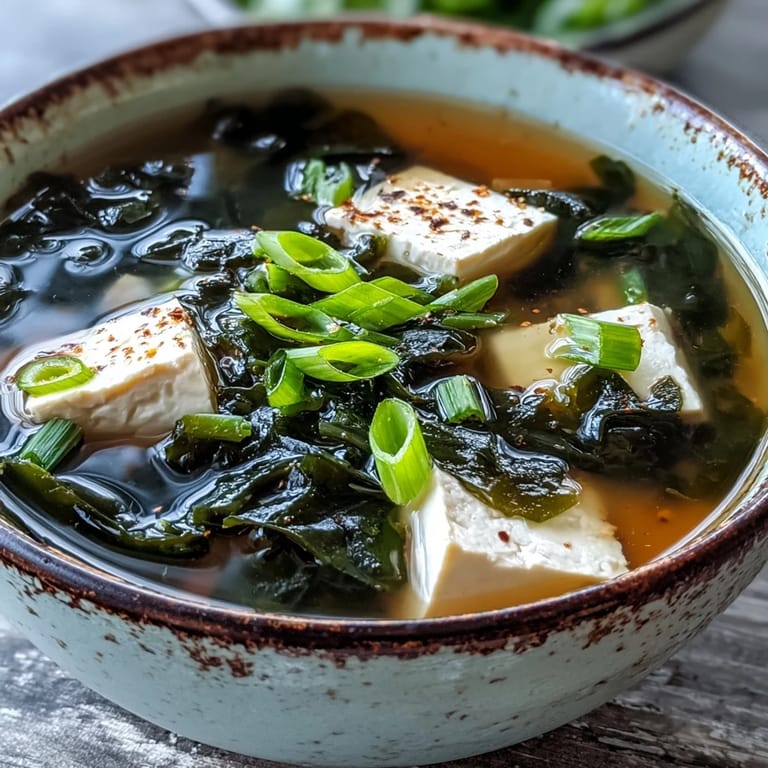
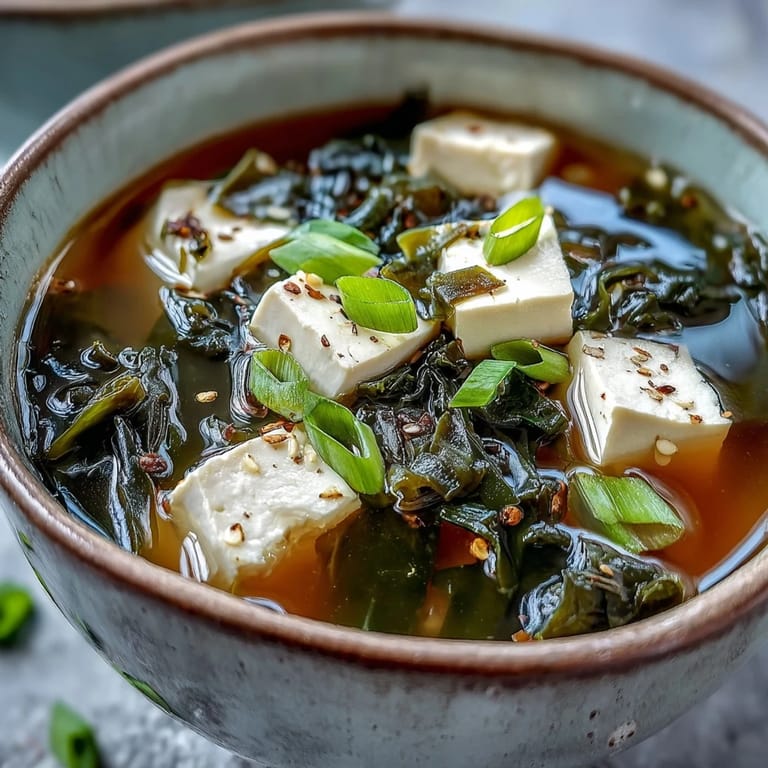
- Silken tofu (200 g): Cut into half-inch cubes—the silken variety matters because it has that delicate texture that practically dissolves on your tongue, nothing like the firmer blocks that can feel rubbery in broth.
- Dried wakame seaweed (2 tablespoons): A five-minute soak transforms these dried ribbons into something tender and almost sweet, adding minerals and that subtle ocean depth.
- Scallions (2, finely sliced): The brightness at the end, fresh and sharp against all that warm comfort, scattered on just before serving.
Tired of Takeout? 🥡
Get 10 meals you can make faster than delivery arrives. Seriously.
One email. No spam. Unsubscribe anytime.
Instructions
- Start with stillness:
- Pour your dashi into a medium saucepan and turn the heat to medium, letting it come to a gentle simmer without rushing—you want small, lazy bubbles, not an aggressive boil that would shatter the delicate tofu.
- Rehydrate the seaweed:
- While the broth warms, place the wakame in a small bowl of cold water and let it sit for five minutes—it'll plump up and soften, then drain it gently and set aside.
- Dissolve the miso:
- This step changed everything for me: scoop your miso paste into a small bowl, then ladle some of that hot dashi over it and whisk until it's completely smooth and dissolved, which keeps lumps from hiding in your bowl.
- Welcome the tofu and seaweed:
- Add your cubed tofu and drained wakame to the simmering broth, letting them warm through for two to three minutes while you handle them with gentleness—the tofu wants respect and a careful hand.
- Marry the miso:
- Remove the pot from heat entirely, then stir in that smooth miso mixture, being deliberate about not boiling it after this point, since heat destroys the probiotics you've gone to the trouble of keeping alive.
- Finish and serve:
- Ladle the soup into bowls, scatter those bright scallions across the top, and serve immediately while the warmth is still rising as steam.
 Save
Save This soup has shown up in my life during moments I didn't expect to need it—the morning after a difficult conversation, on a day when my body was asking for something gentle and nourishing. There's something about the simplicity that makes space for whatever you're carrying, letting the soup be exactly what you need it to be.
The Dashi Question
For the longest time I bought dashi in liquid form, assuming it was easier and fine enough. Then I made it from scratch with kombu and shiitake—letting them steep in hot water for just ten minutes—and everything changed. The depth was different, almost like the soup suddenly had a memory. If you're making this regularly, keeping dried kombu and shiitake in your pantry and brewing dashi whenever you have the moment will transform your relationship with this dish, though the prepared versions are genuinely reliable when life doesn't allow for those ten minutes.
Variations Worth Exploring
I've played with this recipe more than I expected to—sometimes adding thinly sliced mushrooms that soak up the broth, other times stirring in baby spinach at the very end so it stays bright green. There's a version with red miso that I make when I want something slightly earthier and richer, where I mix equal parts red and white paste. The base soup is patient enough to welcome these additions without losing its essential quiet quality, so treat it as an invitation rather than a fixed thing.
Making This Your Own
The beauty of miso soup is that it teaches you to trust your senses instead of just following steps—you'll know when the broth smells ready, when the seaweed has softened enough, when the tofu is perfectly warm. Listen for the small sounds, watch for the steam, taste as you go and adjust the miso to your preference, because comfort is deeply personal. This recipe is a map, but your kitchen is the territory.
- If you find the soup too mild, try mixing two kinds of miso for more complexity.
- Keep your dashi at a gentle simmer throughout—aggressive heat is the enemy of delicate ingredients.
- Scallions should go on at the absolute last moment so they stay fresh and bright against everything warm.
 Save
Save This soup knows what it's doing—it shows up quietly, does its work, and asks for nothing in return but a moment of your attention. That's all the recipe you really need.
Recipe FAQs
- → What is miso paste made from?
Miso paste is created by fermenting soybeans with salt and koji (a specific mold culture). Different varieties include white miso, which is milder and sweeter, and red miso, which offers a deeper, more intense flavor profile developed through longer fermentation.
- → Can I make this soup vegan?
Yes, simply use vegetarian dashi made from kombu seaweed and dried shiitake mushrooms instead of traditional bonito-based stock. Always check your miso paste label to ensure no fish-derived ingredients are included.
- → Why shouldn't I boil miso?
Boiling miso paste destroys its beneficial probiotics and enzymes while creating a grainy texture. The traditional method dissolves miso in a small amount of hot broth first, then incorporates it into the soup after removing from heat.
- → What type of tofu works best?
Silken or soft tofu is ideal for miso soup because its delicate texture complements the light broth. The cubes hold their shape when gently warmed but become tender and creamy when eaten with each spoonful.
- → How do I store leftovers?
Keep refrigerated in an airtight container for up to 2 days. Reheat gently over low heat without bringing to a boil to preserve the miso's flavor and probiotic benefits. Note that tofu may become slightly firmer after refrigeration.
- → What vegetables can I add?
Thinly sliced shiitake mushrooms, fresh spinach, snow peas, or cubed daikon radish all complement the flavors beautifully. Add heartier vegetables during simmering, while delicate greens like spinach should be stirred in just before serving.