 Save
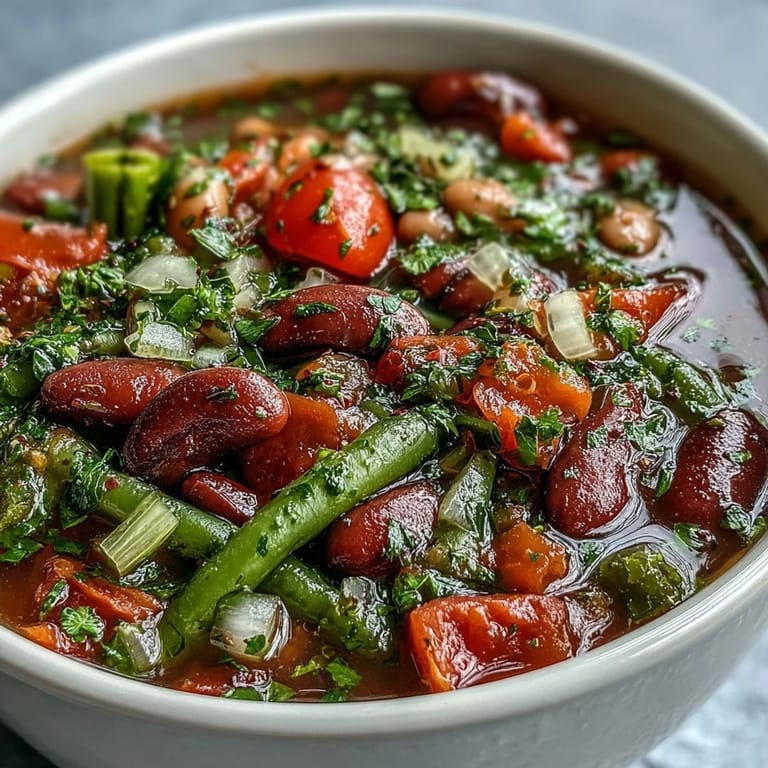
Save My neighbor handed me a jar of homemade three-bean salad one summer afternoon, and I stared at it thinking, how do I turn this into something warm? The answer arrived on a chilly October evening when I wanted comfort but craved that bright, tangy flavor I remembered. I dumped it all into a pot with broth, and suddenly this humble side dish became a soul-warming soup that tastes like summer in a bowl, no matter the season.
I made this for my book club last spring, and someone actually asked for seconds before finishing their first bowl—something that had never happened before at our gatherings. The bright colors on the table seemed to spark the whole evening, and we ended up talking longer than usual, lingering over empty bowls and the last crusty bread slice. That's when I realized this soup does something special: it makes people slow down and stay a while.
Ingredients
- Canned kidney beans (1 cup): Drain and rinse these thoroughly to remove excess sodium and that tinny aftertaste that can muddy the whole pot.
- Canned cannellini beans (1 cup): These creamy white beans add a subtle richness and help thicken the broth naturally as they soften.
- Canned green beans (1 cup, cut into 1-inch pieces): Use fresh and blanched if you want more snap in every spoonful, but canned works beautifully when drained well.
- Red bell pepper (1 medium, diced): This is your sweetness and color; don't skip it or use orange, as red brings a deeper, almost fruity note.
- Red onion (1 small, finely chopped): Sharper than yellow, it holds its flavor through simmering and adds visual pop to each bite.
- Celery (1 stalk, diced): This anchors the soup in classic vegetable soup territory and gives the broth a subtle earthiness you won't quite be able to name.
- Garlic (2 cloves, minced): Don't reach for garlic powder here; fresh garlic mellows beautifully during simmering and becomes almost sweet.
- Cherry tomatoes (1 cup, halved): They burst slightly during cooking, releasing their juice right into the broth for brightness and body.
- Low-sodium vegetable broth (4 cups): This is your base, so choose one you'd actually drink straight; it makes all the difference in the final flavor.
- Olive oil (2 tablespoons): Use good oil here since it's tasted directly and carries the initial sauté's warmth through the whole pot.
- Red wine vinegar (2 tablespoons): This is the soul of the soup, bringing that signature tangy kick that makes people come back for more.
- Dijon mustard (1 tablespoon): A touch of mustard deepens the vinegar's complexity and adds a subtle spice that rounds everything out.
- Sugar (1 teaspoon): Just a pinch to balance the acidity; it shouldn't taste sweet, only mellowed.
- Dried oregano (½ teaspoon): Mediterranean herbs bring the whole soup into focus without overwhelming the fresh vegetable flavors.
- Crushed red pepper flakes (¼ teaspoon, optional): A whisper of heat at the end keeps it interesting and wakes up your palate with each spoonful.
- Salt and black pepper: Taste as you go; canned broth already carries salt, so add gradually and adjust at the very end.
- Fresh parsley (2 tablespoons, plus more for garnish): Stir it in at the last moment so it stays bright green and herbaceous, not dark and faded.
Tired of Takeout? 🥡
Get 10 meals you can make faster than delivery arrives. Seriously.
One email. No spam. Unsubscribe anytime.
Instructions
- Warm your base:
- Heat olive oil in a large pot over medium heat until it shimmers slightly, then add your red onion, celery, and garlic. Let them soften for 3 to 4 minutes, stirring occasionally, until the kitchen fills with that unmistakable savory aroma that signals you're on the right track.
- Build the color:
- Stir in your diced red bell pepper and cook for another 2 minutes until it just begins to soften at the edges. This step matters because the pepper releases subtle sweetness that balances the vinegar coming later.
- Introduce the beans:
- Add all three types of beans along with your halved cherry tomatoes, stirring gently for 1 to 2 minutes so they warm through and start releasing their flavors into the base. You'll notice the pot transforms from aromatic to visually stunning in seconds.
- Add the liquid:
- Pour in your vegetable broth and bring the mixture to a gentle boil, then immediately reduce the heat to a simmer. The transition from rolling boil to gentle simmer is when the real cooking begins.
- Create the tangy essence:
- While the pot simmers, whisk together red wine vinegar, Dijon mustard, sugar, oregano, and red pepper flakes in a small bowl until the sugar dissolves. Pour this mixture into the pot and stir well, watching as the broth takes on a subtle golden hue from the vinegar.
- Let flavors marry:
- Simmer uncovered for 15 minutes, resisting the urge to fiddle with it; this is when the individual ingredients stop sounding like separate voices and start singing as one. The aroma will intensify, becoming savory, slightly tangy, and absolutely irresistible.
- Finish and taste:
- Season with salt and black pepper to your preference, remembering that the broth already carries some sodium. Stir in your fresh parsley at the very last moment so it stays vibrant and fresh-tasting rather than muted.
- Serve with warmth:
- Ladle the soup into bowls, garnishing each with an extra sprinkle of fresh parsley and a crack of black pepper. Serve immediately while the heat brings out all the flavors and the beans still hold their shape.
 Save
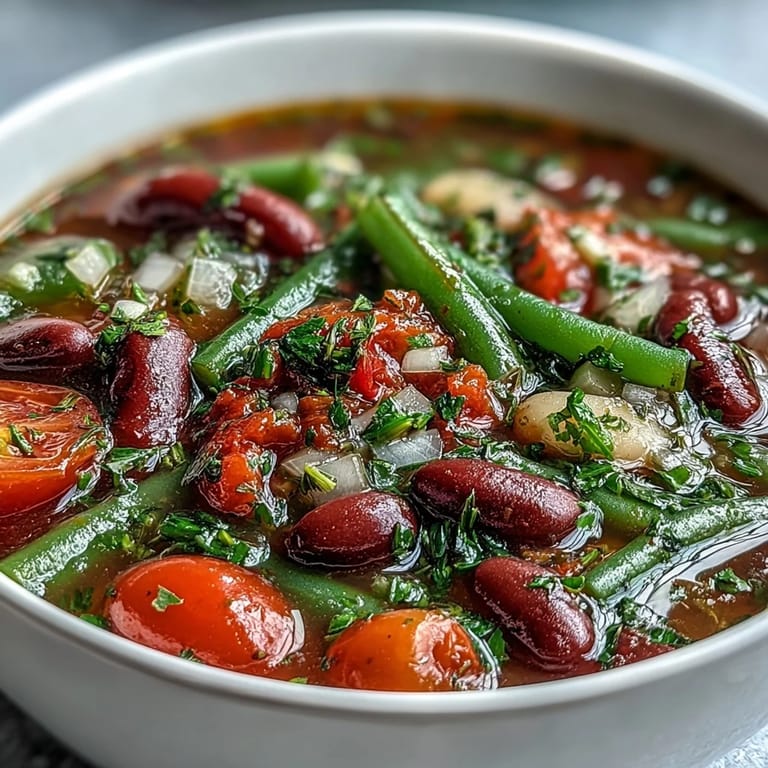
Save My daughter came home from school one afternoon and found this soup simmering on the stove, and she actually set down her backpack to eat a bowl before telling me about her day. In that small moment, I understood why this particular soup matters—it's not just nourishing; it's an invitation to pause and be present. Food can do that when it's made with attention and care.
The Vinegar Question
I've experimented with different vinegars, and each one tells a slightly different story. Red wine vinegar brings sophistication and depth, while apple cider vinegar makes the soup feel lighter and more approachable, almost like drinking a gentle breeze. White vinegar tastes too sharp and one-dimensional here, missing the nuance that makes this soup special. Choose based on your mood: red wine for a cozy evening, apple cider for a bright afternoon.
Making It Your Own
This soup is forgiving in the best way, eager to absorb whatever vegetables you have lingering in your crisper drawer. I've added diced zucchini, fresh green beans, and even some roasted sweet potato when I wanted more substance. The foundation of beans, vinegar, and broth stays constant, so everything else is just you having a conversation with what's available, what sounds good, what might surprise you.
Serving Suggestions & Storage
This soup tastes even better the next day after the flavors have settled and deepened overnight, so make it on purpose the day before you need it. Reheat gently on the stovetop over medium heat, adding a splash of broth if it's thickened too much, and taste again before serving since some of the brightness may have mellowed slightly.
- Pair it with crusty bread for dipping, or serve alongside a simple arugula salad dressed with lemon and olive oil for contrast.
- Store leftovers in an airtight container in the refrigerator for up to 4 days, or freeze for up to 3 months (the texture stays lovely even after freezing).
- For extra protein without changing the flavor profile, stir in cooked quinoa, white beans, or shredded rotisserie chicken right before serving.
 Save
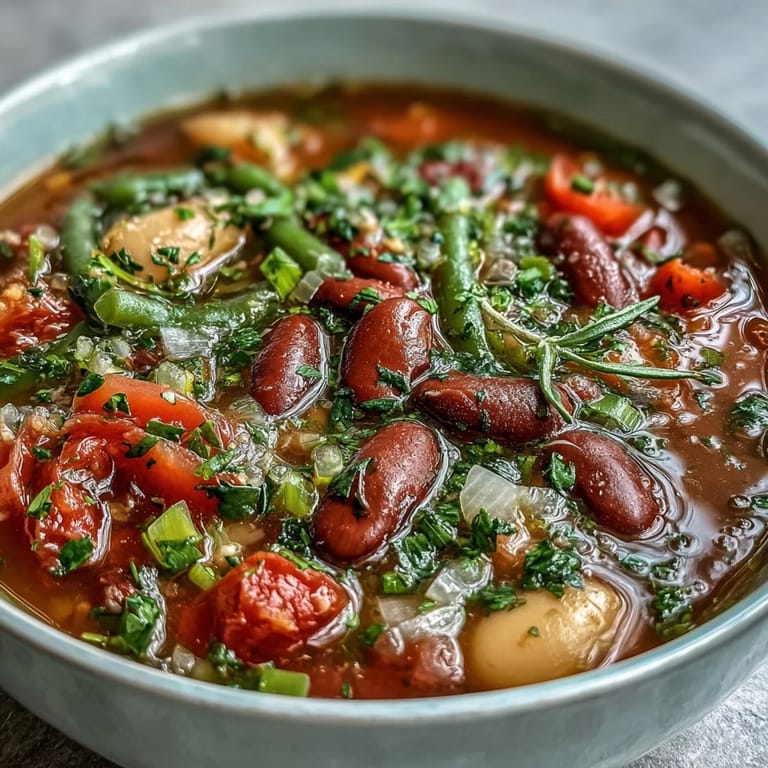
Save This soup taught me that sometimes the best dishes come from reimagining something familiar, not from starting from scratch. It's warm, it's bright, and it brings people to the table—which is really all that matters.
Recipe FAQs
- → Can I use fresh beans instead of canned?
Yes, you can use cooked fresh beans. Cook kidney and cannellini beans separately until tender, and blanch fresh green beans for 3-4 minutes before adding to the soup.
- → How do I store leftover three-bean salad soup?
Store in an airtight container in the refrigerator for up to 4 days. Reheat gently on the stovetop or in the microwave. The flavors actually improve after a day as they continue to meld together.
- → Can this soup be made vegan?
This soup is already naturally vegan as written. Just ensure your vegetable broth and any optional additions don't contain animal products. Skip the chicken suggestion and stick with quinoa for added protein.
- → What can I substitute for red wine vinegar?
Apple cider vinegar works well for a milder tang, or try white wine vinegar for similar acidity. Lemon juice can also provide brightness, though it will change the flavor profile slightly.
- → Can I freeze this soup?
Yes, this soup freezes well for up to 3 months. Cool completely before transferring to freezer-safe containers. Thaw overnight in the refrigerator and reheat on the stovetop, adding a splash of broth if needed.
- → How can I make this soup more filling?
Add cooked quinoa, brown rice, or small pasta shapes for extra heartiness. You can also serve with crusty bread or add diced potatoes during the simmering stage for more substance.