 Save
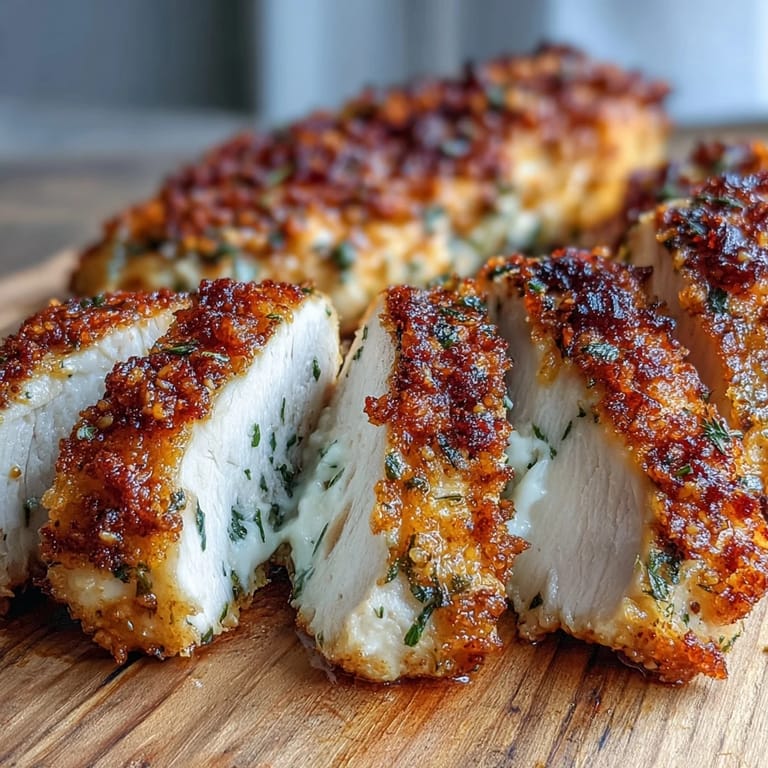
Save My neighbor knocked on my door one Thursday holding a bag of chicken breasts and a look of panic. She had guests arriving in forty minutes and no plan. I pulled out olive oil, a few spices, and showed her the simplest trick: even thickness, high heat, and a quick rest. The chicken came out golden and juicy, and she texted me later that night saying everyone asked for the recipe. Sometimes the best dishes are the ones you can teach in under five minutes.
I started making this on Sundays for the week ahead after realizing how much money I was spending on precooked rotisserie chicken. The first batch I made, I forgot to pound the breasts flat and ended up with one side dry and the other undercooked. Now I never skip that step. It also taught me that a meat thermometer is not optional, its the difference between guessing and knowing.
Ingredients
- Boneless, skinless chicken breasts (6 to 8 oz each): Look for breasts that are similar in size so they cook evenly, and if theyre really thick, dont be shy about pounding them thinner.
- Olive oil: This helps the spices stick and keeps the surface from drying out in the oven.
- Garlic powder: I prefer this over fresh garlic for rubs because it distributes evenly and doesnt burn.
- Onion powder: Adds a mild sweetness that balances the savory notes without overpowering anything.
- Paprika (smoked or sweet): Smoked paprika gives a subtle depth, sweet paprika keeps it bright and simple.
- Dried oregano or Italian seasoning: A little herby note that makes the chicken taste intentional, not plain.
- Salt and black pepper: Season with confidence, chicken needs more than you think to taste like anything.
- Lemon slices and fresh parsley or cilantro (optional): A squeeze of lemon at the end wakes everything up, and herbs make it look like you tried.
Tired of Takeout? 🥡
Get 10 meals you can make faster than delivery arrives. Seriously.
One email. No spam. Unsubscribe anytime.
Instructions
- Preheat and Prep Your Pan:
- Set your oven to 400 degrees F and line a baking sheet with parchment paper or give a baking dish a light greasing. This keeps cleanup easy and prevents sticking.
- Dry and Flatten the Chicken:
- Pat the chicken breasts completely dry with paper towels, then place them between two sheets of plastic wrap or parchment and gently pound them to an even three quarter inch thickness. This is the single most important step for juicy, evenly cooked chicken.
- Mix Your Seasoning:
- In a small bowl, combine the olive oil, garlic powder, onion powder, paprika, oregano, salt, and pepper until it forms a loose paste. It should smell warm and a little smoky.
- Coat the Chicken:
- Rub the seasoning mixture all over both sides of each chicken breast, making sure to cover every inch. If you want to marinate it first, go ahead and let it sit in the fridge for thirty minutes to two hours, then pat it dry before seasoning.
- Arrange and Bake:
- Place the chicken breasts in a single layer on your prepared pan, leaving a little space between each one so the heat circulates. Bake for 18 to 22 minutes, or until an instant read thermometer reads 165 degrees F in the thickest part.
- Rest Before Slicing:
- Pull the pan out of the oven and let the chicken rest for five minutes on the pan. This lets the juices redistribute so they dont run all over your cutting board.
- Garnish and Serve:
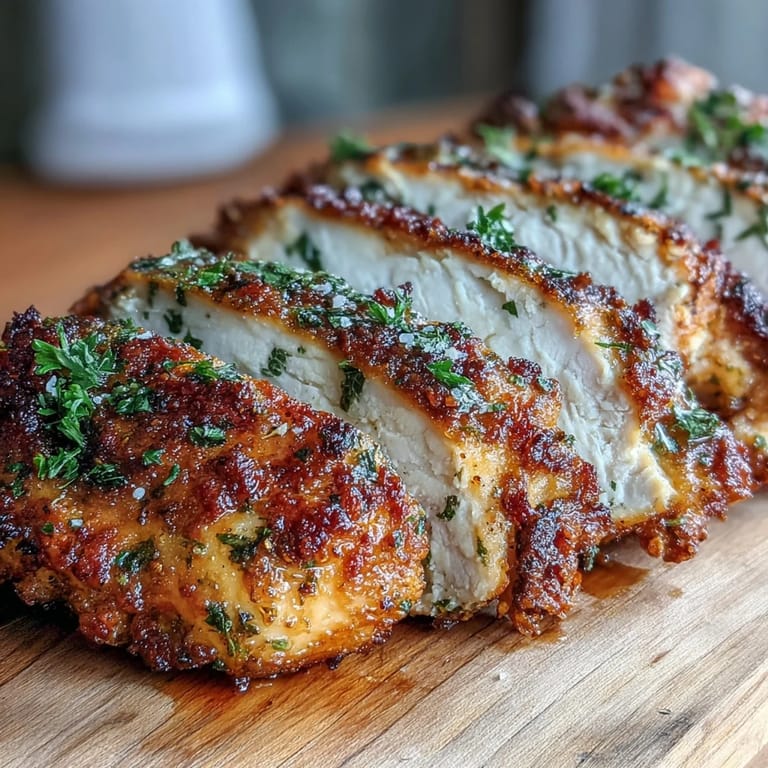
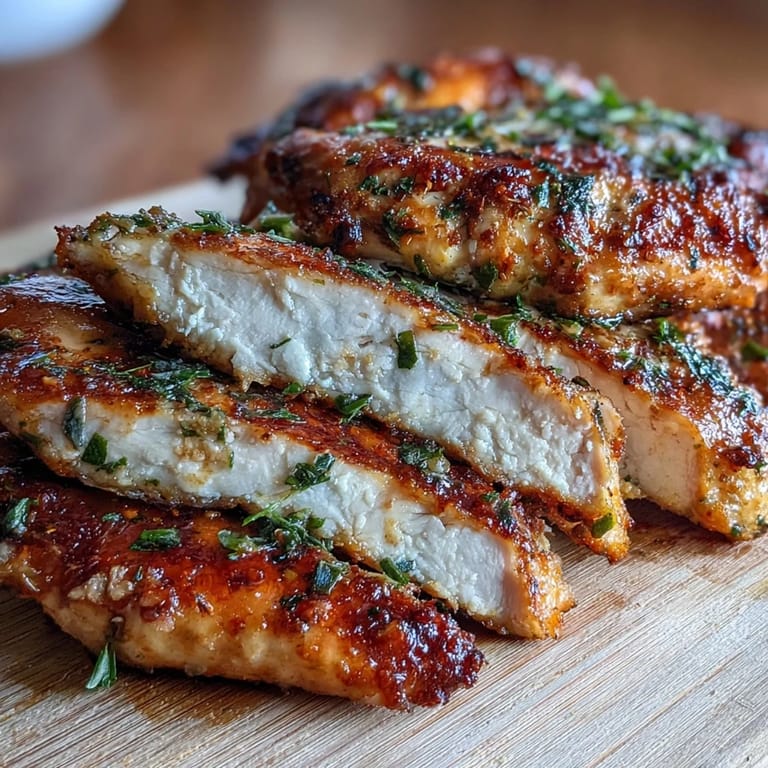
- Top with lemon slices and a sprinkle of fresh parsley or cilantro if you have it. Serve warm with whatever sides make you happy.
 Save
Save One night I made this for a friend who swore she hated chicken breast because it was always dry and boring. I handed her a slice with a little lemon squeezed over it, and she paused mid bite and said, wait, this is actually good. That moment reminded me that technique matters more than fancy ingredients. Sometimes all it takes is paying attention to the basics.
How to Store and Reheat
Let the chicken cool completely, then store it in an airtight container in the fridge for up to four days. I like to slice it before storing so its ready to throw into salads or wraps. Reheat gently in the microwave with a damp paper towel over it, or warm it in a skillet over medium low heat with a splash of broth to keep it from drying out.
What to Serve It With
This chicken plays well with just about anything. I love it over a big pile of greens with roasted sweet potatoes and a tangy vinaigrette, or tucked into a wrap with hummus and crunchy veggies. It also works beautifully alongside rice, quinoa, or mashed potatoes if you want something more filling. On lazy nights, I just eat it straight with a side of steamed broccoli and call it dinner.
Ways to Change It Up
Once you get the basic method down, you can season this chicken a hundred different ways. Swap the paprika for cumin and add a squeeze of lime for a taco vibe, or use lemon zest and thyme for something brighter. If you like heat, toss in a pinch of cayenne or red pepper flakes with the spices. You can also use bone in thighs instead of breasts, just add five to seven minutes to the baking time and check for that same 165 degree internal temperature.
- Try a honey mustard glaze by mixing Dijon, honey, and a little olive oil and brushing it on halfway through baking.
- Add a handful of cherry tomatoes to the pan during the last ten minutes for a pop of color and a built in side.
- Finish with a sprinkle of parmesan and fresh basil if you want to take it in an Italian direction.
 Save
Save This recipe has become my default answer when someone asks what to make for dinner on a busy weeknight. Its reliable, adaptable, and never lets me down.
Recipe FAQs
- → How do I keep chicken breasts from drying out in the oven?
Pounding chicken to even ¾-inch thickness ensures uniform cooking. The olive oil in the seasoning creates a protective barrier that seals in moisture. Avoid overcooking by using an instant-read thermometer—remove at exactly 165°F. Letting the meat rest for 5 minutes allows juices to redistribute throughout the fibers.
- → What temperature should chicken breasts be baked at?
400°F (200°C) provides the ideal balance of cooking speed and moisture retention. This higher temperature creates a light golden exterior while cooking the interior thoroughly in 18–22 minutes. Lower temperatures risk drying out the meat before it reaches the safe internal temperature of 165°F.
- → Can I use chicken thighs instead of breasts?
Absolutely. Chicken thighs contain more fat, making them naturally more forgiving and succulent. Increase the baking time by 5–7 minutes to account for their denser texture. The same seasoning blend and temperature work perfectly, though thighs may take slightly longer to reach 165°F at the thickest point.
- → How long does cooked chicken keep in the refrigerator?
Store cooled chicken in airtight containers for up to 4 days. Slice before storing for easier portioning throughout the week. The cooked meat reheats beautifully in the microwave at 50% power or gently warmed in a skillet with a splash of broth or olive oil to restore moisture.
- → What sides pair well with baked chicken breast?
The mild, versatile flavor complements roasted vegetables like broccoli, Brussels sprouts, or sweet potatoes. For lighter meals, slice over mixed greens with vinaigrette. Whole grains such as quinoa, brown rice, or roasted potatoes make satisfying companions. The lean protein also shines in wraps, sandwiches, or grain bowls.
- → Should I cover the chicken while baking?
Baking uncovered yields the best results. The direct heat creates a light, appetizing golden exterior and allows excess moisture to evaporate slightly, concentrating flavors. Covering would trap steam and prevent desirable boning. If you notice the tops browning too quickly toward the end of cooking, a loose foil tent can protect them.