 Save
Save There's something about standing in front of an open refrigerator at dusk, spotting coconut milk and fresh Thai basil, and suddenly deciding the evening needs a completely different direction. That's how this bowl came into my life, born from one of those moments when I had chicken thighs on hand and an inexplicable craving for something bright and fragrant. The first time I put it together, my kitchen filled with the smell of garlic and ginger hitting hot oil, and I realized this wasn't complicated at all—just honest ingredients arranged with intention.
I made this for friends on a warm Thursday evening, and watching someone who claimed not to like Thai food ask for the recipe was my favorite kind of small victory. The bowl sat in the middle of the table like edible proof that simple components—when treated with respect and seasoned properly—become something memorable. That night, seconds were requested before first bites were finished.
Ingredients
- Jasmine rice: Rinsing it removes excess starch, so each grain stays separate and absorbs the coconut flavor without turning gummy.
- Coconut milk (full-fat): Don't reach for the light version here—the richness is what makes the rice taste like something special.
- Boneless, skinless chicken thighs: They stay juicy through cooking where breasts might dry out, and the flavor is deeper.
- Fish sauce: Just one tablespoon transforms the chicken into something undeniably Thai; don't skip it or substitute with soy alone.
- Fresh ginger and garlic: Minced fresh versions release their oils better than anything pre-prepared, filling your kitchen with that unmistakable aroma.
- Sugar snap peas and carrots: The brief blanch keeps them tender-crisp, adding texture that raw vegetables alone can't achieve.
- Fresh cilantro and Thai basil: These aren't garnish afterthoughts—they're essential, each bringing their own herbal personality to the bowl.
- Roasted peanuts: The final textural element that makes eating this feel intentional rather than accidental.
Tired of Takeout? 🥡
Get 10 meals you can make faster than delivery arrives. Seriously.
One email. No spam. Unsubscribe anytime.
Instructions
- Start Your Coconut Rice:
- Combine rinsed jasmine rice, coconut milk, water, and salt in a saucepan, then bring to a boil. Once the liquid is moving, lower the heat to its gentlest setting, cover, and let it simmer undisturbed for 15 to 18 minutes until all liquid disappears and the rice turns tender. The resting period after you remove it from heat matters more than you'd think—it lets the rice finish cooking gently in its own steam.
- Sear the Chicken with Aromatics:
- Heat oil in a large skillet or wok until it shimmers, then add minced garlic and ginger, letting them perfume the oil for exactly one minute. Add your chicken pieces and cook, stirring occasionally, until each piece turns golden on the outside and cooks through, around 6 to 7 minutes depending on how small you cut them.
- Season the Chicken:
- Pour in fish sauce, soy sauce, brown sugar, white pepper, and fresh lime juice, then toss everything together so the chicken gets coated evenly in the glossy sauce. Taste a piece—you should taste salty, slightly sweet, and bright with citrus, all at once.
- Quick-Cook the Vegetables:
- Bring a pot of water to boil and drop in your sugar snap peas and julienned carrots for exactly one minute, then drain and plunge them into cold water to stop the cooking. This technique preserves their crunch while softening them just enough to be pleasant to bite into.
- Assemble Your Bowls:
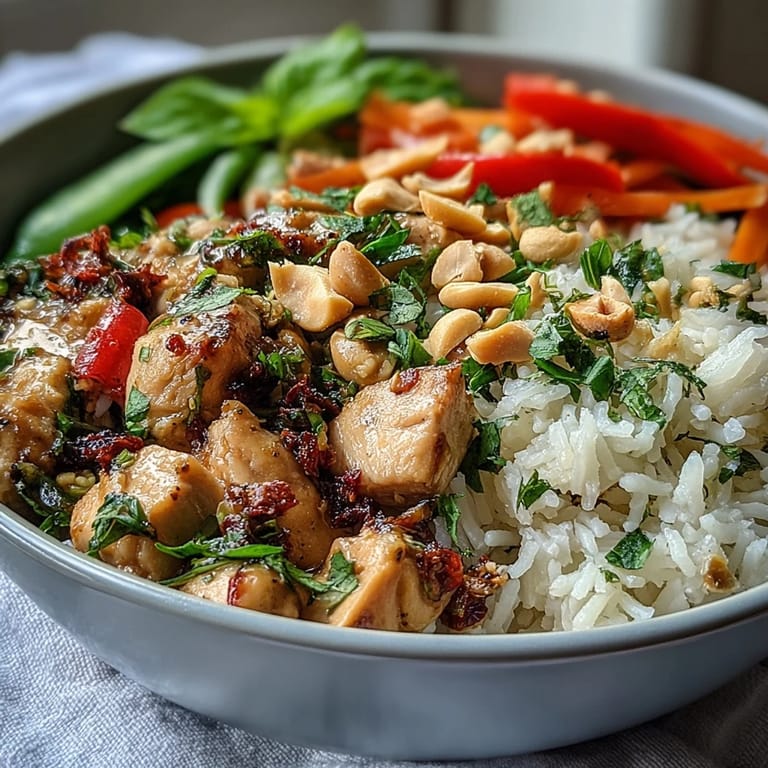
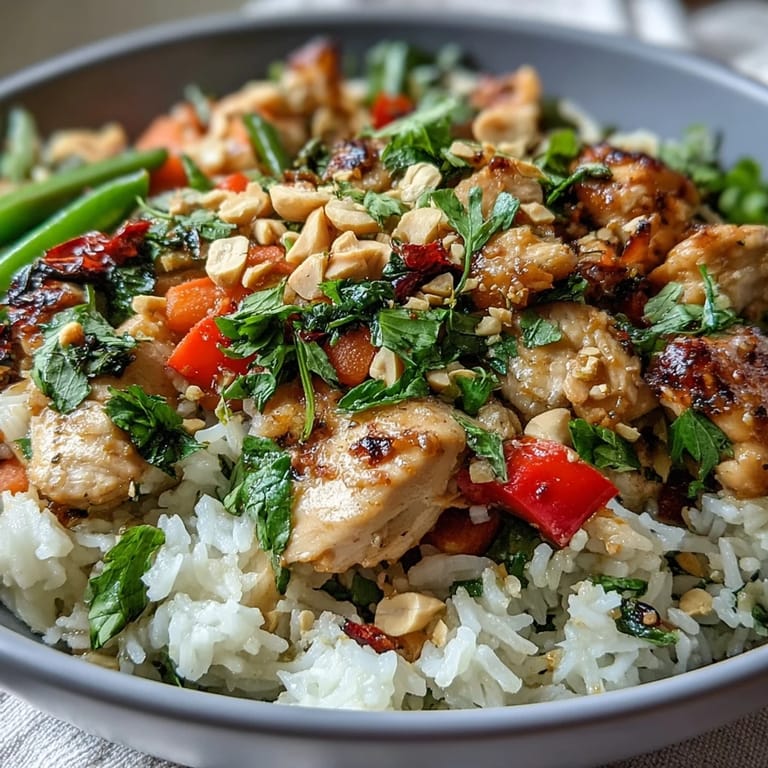
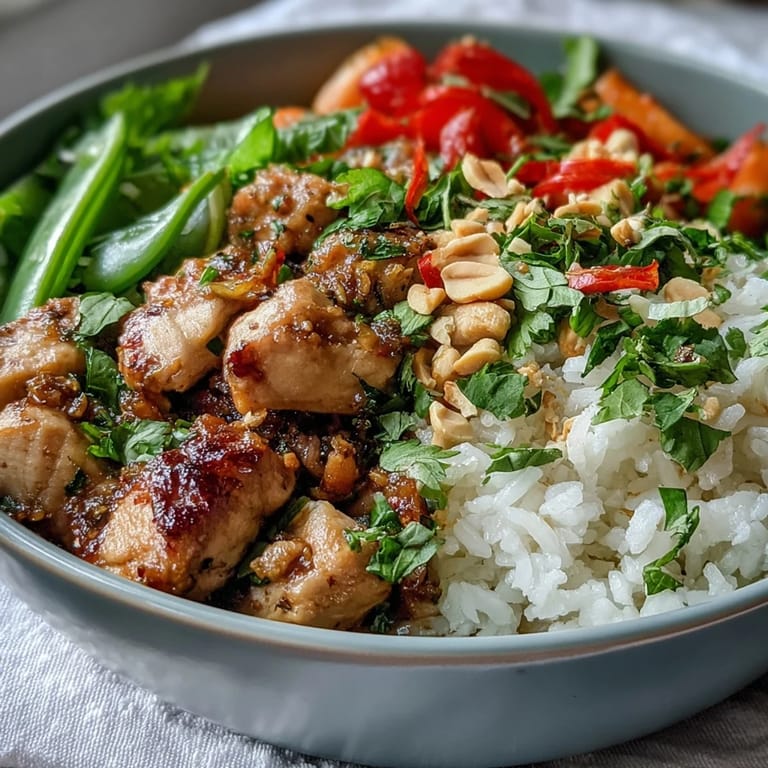
- Divide the fluffed coconut rice among four bowls, creating a small nest, then arrange the cooked chicken on top. Distribute the bell pepper slices, blanched vegetables, and fresh herbs across each bowl, layering them so you get everything in each bite.
- Finish and Serve:
- Scatter chopped roasted peanuts over the top of each bowl and set lime wedges on the side. Invite people to squeeze lime juice over their bowl just before eating, releasing one final burst of brightness.
 Save
Save The real magic happened when my skeptical partner took their first bite and closed their eyes, and I knew this bowl had earned a permanent spot in our rotation. There's something about food that feels both nourishing and exciting at the same time, and this bowl somehow manages both.
The Secret of Coconut Rice
Coconut rice changes everything about a bowl. Instead of plain white rice that's just a base, coconut milk transforms it into something creamy and inherently flavorful, so you don't need a sauce drowning every component. The rice becomes an active player rather than a supporting player, and that shift in perspective changes how the entire dish feels when you eat it. I've learned that the ratio matters—equal parts coconut milk and water gives you richness without turning the rice into porridge.
Building Flavor Layers
What makes this bowl sing instead of simply nourish is the layering of different flavor notes that hit your palate in sequence. The chicken gets its umami depth from fish sauce and soy, its brightness from lime, and its aromatics from ginger and garlic working together. The vegetables provide freshness and crunch that cuts through the richness, while the herbs add herbal complexity that makes you want another bite to fully understand what you're tasting. This is how Thai food works—it's not one bold flavor overwhelming everything else, but rather a conversation between savory, bright, herbaceous, and sweet all at once.
Making It Your Own
This bowl is forgiving enough to adapt to whatever you have on hand and whatever your taste preferences demand. I've made it with tofu when friends visited who don't eat meat, and with shrimp when I wanted something that cooked even faster than chicken. The vegetables can shift with seasons—in summer I add more raw components, while in colder months I might blanch everything a touch longer. The fundamental structure stays sound no matter what you swap around.
- If heat isn't your preference, seed the chili or leave it out entirely—the other flavors hold the bowl together.
- Make the components ahead of time and assemble just before serving for maximum freshness, or eat leftovers cold the next day if you prefer.
- Lime juice added at the very end brightens everything, so don't skip squeezing those wedges over your bowl.
 Save
Save This Thai chicken coconut bowl has become the recipe I turn to when I want to feel like I'm cooking something interesting without the stress of complicated technique. It's proof that thoughtful simplicity beats elaborate fuss every single time.
Recipe FAQs
- → Can I make the coconut rice ahead of time?
Yes, the coconut rice can be prepared up to 2 days in advance. Store in an airtight container in the refrigerator and reheat gently with a splash of water before serving to restore fluffiness.
- → What protein alternatives work well?
Firm tofu cubes, shrimp, or sliced beef make excellent substitutes. Adjust cooking time accordingly—shrimp needs 3-4 minutes, while beef may require slightly longer to reach desired doneness.
- → How do I store leftovers?
Keep components separate in airtight containers for up to 3 days. Reheat rice and chicken gently, then add fresh vegetables and herbs just before serving to maintain optimal texture and flavor.
- → Can I use brown rice instead?
Brown rice works well but requires longer cooking time and additional liquid. Increase water by ¼ cup and simmer for 40-45 minutes until tender. The nutty flavor complements the Thai spices beautifully.
- → What can I substitute for fish sauce?
For vegetarian versions, use additional soy sauce or a vegetarian fish sauce alternative. Coconut aminos provide a similar umami depth with a slightly sweeter profile, though you may want to add a pinch of salt.
- → How spicy is this dish?
The base dish has mild heat from aromatic ingredients. Add sliced red chili to increase spice levels gradually. Start with half a chili and adjust to your preference, as Thai chilies vary significantly in intensity.