 Save
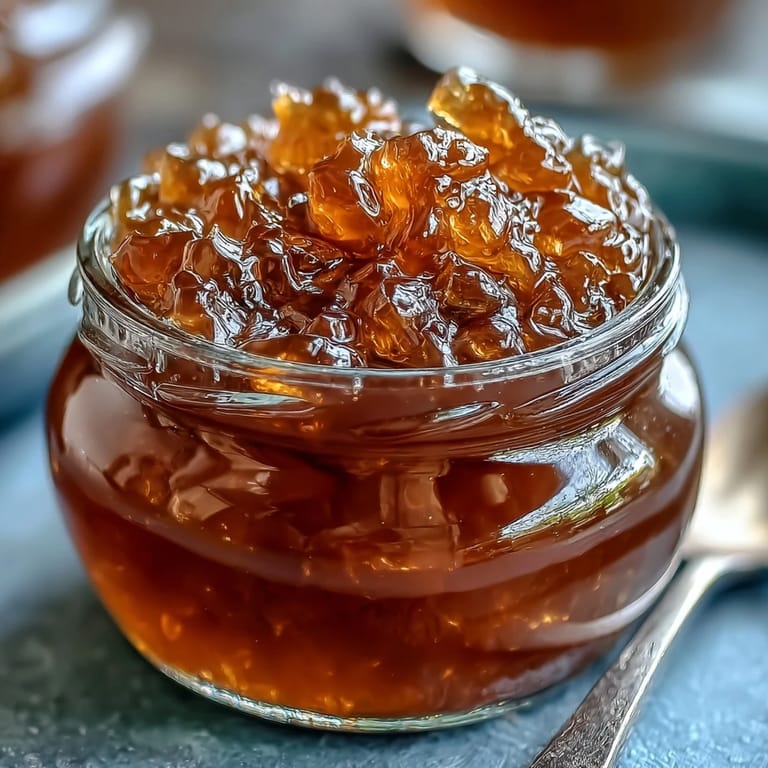
Save My neighbor called me over one April morning, barefoot in her overgrown yard, pointing at the bright yellow flowers dotting her lawn like little suns. She'd been reading about foraging and wanted to try making jelly from them, but neither of us knew if we were crazy or onto something. Turns out, dandelion blossoms steep into liquid gold—delicate, almost honey-like, with a floral whisper that tastes like spring in a jar. That first batch set perfectly on our third try, and now I can't see a dandelion without thinking of her kitchen filling with the smell of something wild made tame.
I brought three jars to a dinner party last summer, nervous about serving something so unconventional. The host spread it on warm goat cheese with crackers, and the whole room went quiet for a moment—not in a bad way, in that surprised, delighted way. Someone asked if I'd made it at a specialty shop, and when I explained I'd foraged the flowers myself, suddenly everyone wanted to know how. That night shifted something for me about cooking: the best meals aren't always the most complicated, just the ones that come with a good story.
Ingredients
- Dandelion petals (2 cups, yellow parts only): Only the bright yellow parts have that delicate floral flavor; the green sepals underneath taste bitter and will ruin the whole batch if you're not careful.
- Water (4 cups): Use filtered water if your tap water is heavily chlorinated, as it can mute the subtle dandelion flavor.
- Lemon juice (2 tablespoons, freshly squeezed): Fresh lemon is non-negotiable here—bottled lemon juice has a different acidity and will throw off the set.
- Powdered fruit pectin (1 package, 1.75 oz): This is what transforms thin infusion into spreadable jelly; some people swap it for low-sugar pectin to reduce sweetness.
- Granulated sugar (4 cups): Standard white sugar works best for a clear, jewel-toned jelly that shows off that golden color.
Tired of Takeout? 🥡
Get 10 meals you can make faster than delivery arrives. Seriously.
One email. No spam. Unsubscribe anytime.
Instructions
- Hunt and gather your petals:
- Find dandelions in areas you know are pesticide-free—ideally your own yard or a friend's garden. Pick flowers on a dry afternoon when they're fully open, pinch off the yellow petals from the green base, and toss the bitter parts aside as you go.
- Rinse and prepare:
- Give your petals a gentle rinse in cool water to wash away any dust or tiny insects, then let them air-dry on a clean towel for a few minutes. Patience here prevents grit in your final jelly.
- Start the infusion:
- Combine petals and water in a saucepan, bring to a boil, then dial back to a gentle simmer for exactly 5 minutes. This coaxes out the flavor without cooking away the delicate notes.
- Let time do the work:
- Cover the pot and walk away for 4 hours (or overnight if you want deeper flavor). The longer it sits, the more golden and floral the liquid becomes; this is when your kitchen smells like bottled sunshine.
- Strain with care:
- Pour everything through a fine mesh sieve or cheesecloth into a bowl, letting gravity do most of the work, then gently press the petals to coax out the last bit of liquid. You want about 3½ to 4 cups of clear, golden infusion.
- Build the jelly base:
- Pour your strained infusion into a large pot, add lemon juice and pectin, and stir until the pectin dissolves completely. Bring to a rolling boil—the kind that doesn't stop bubbling when you stir it.
- The moment of truth:
- Add all the sugar at once and stir constantly as it returns to a rolling boil. Once it's truly boiling hard, set a timer for 1 to 2 minutes, watching as it reaches 220°F on a thermometer—this is the magic temperature where jelly actually sets.
- Skim and jar:
- Remove from heat and quickly skim off any foam that's gathered on top. Working fast while everything is still hot, ladle the jelly into sterilized jars, leaving ¼-inch headspace at the top so the lids seal properly.
- Seal for storage:
- Wipe the rims clean with a damp cloth, apply lids and rings, then process in a boiling water bath for 10 minutes to ensure safe storage. This creates those satisfying pops as jars cool.
- Rest and listen:
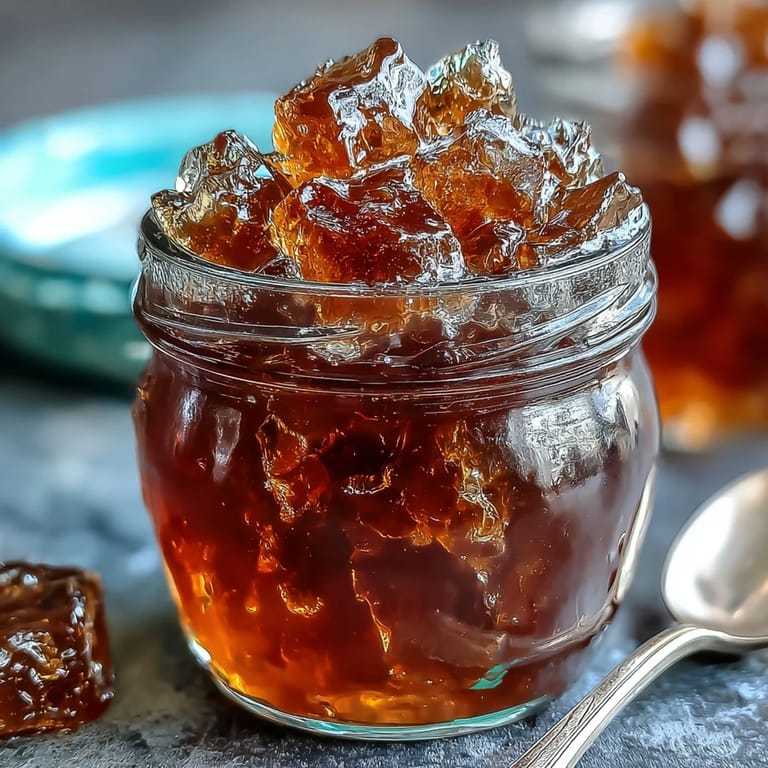
- Leave the jars alone on the counter for 12 hours undisturbed while they cool completely and the jelly sets up. You'll hear the lids ping as they seal—that sound means you've won.
 Save
Save Last winter, I pulled out a jar from my cellar shelf to gift to a friend who'd just moved into her first house. Watching her face light up as she tasted it on buttered toast—recognizing that it was made by hand, from something wild, from someone who thought of her—that's when I understood why people have been preserving food for centuries. It's not just about making something last; it's about making something mean something.
Foraging Tips for Beginners
Dandelions are everywhere once you start looking, but picking the right ones matters. Scout your neighborhood in late March or April when the flowers are most abundant and potent; if you wait until June, they become tough and sparse. Always ask permission before picking in someone else's yard, and avoid areas near roads where exhaust settles on the plants. The safest bet is to forage from your own garden or a trusted friend's pesticide-free space where you know exactly what's been sprayed.
Flavor Variations and Twists
Once you master the basic recipe, the variations become endless. I've added orange zest for brightness, a whisper of rose water for something more perfumed, and even a pinch of ground ginger to give it depth. Some cooks reduce the sugar slightly and use low-sugar pectin if they prefer something less sweet that lets the flower flavor sing louder. The beauty of this jelly is that it's a blank canvas for whatever subtle flavors your instincts pull you toward.
Serving and Storage Ideas
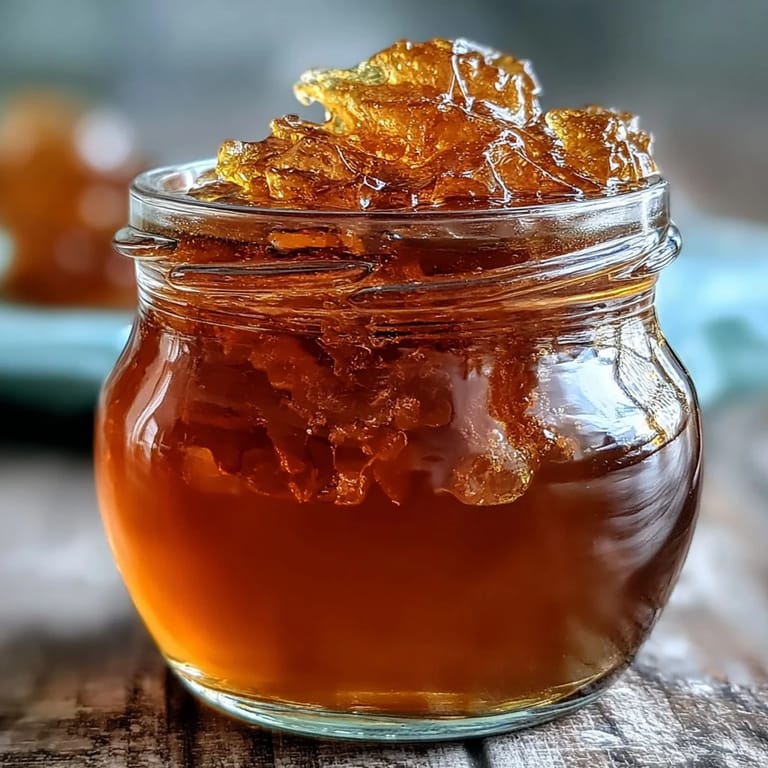
This jelly shines on warm buttered toast, but it's equally at home spooned over creamy goat cheese with crackers, swirled into plain yogurt for breakfast, or brushed over a finished cake as a glossy glaze. Unopened jars keep for a full year in a cool, dark cupboard, and once opened, they last about three weeks in the refrigerator. The color will deepen slightly over time, which only makes it look more precious sitting on a shelf.
- Pair it with sharp cheeses and crispy crackers for an elegant appetizer that takes zero cooking.
- Stir a spoonful into sparkling water or cocktails for a subtle floral note that surprises people.
- Gift it with a handwritten label telling the story of where and when you foraged—the story is half the gift.
 Save
Save Making dandelion jelly is a small act of paying attention to what grows wild around you and turning it into something that tastes like home. Once you've done it once, you'll find yourself watching those yellow flowers with a new kind of hunger every spring.
Recipe FAQs
- → How do I prepare dandelion petals for jelly?
Remove all green parts such as sepals and stems to avoid bitterness, then gently rinse to clear debris before using the yellow petals for infusion.
- → Can I adjust the sweetness of this jelly?
Yes, reduce the granulated sugar amount and opt for low-sugar pectin if you prefer a less sweet spread.
- → What is the best way to steep the dandelion petals?
Simmer petals briefly, then cover and let steep for at least 4 hours or overnight for a stronger floral flavor.
- → How do I know when the jelly has set properly?
The jelly reaches setting point when boiling at 220°F (104°C) and thickens after cooling; a rolling boil for 1–2 minutes after adding sugar helps achieve this.
- → Are there any important safety tips when foraging dandelions?
Only pick petals from pesticide-free areas and wash them thoroughly to ensure cleanliness and safety.