 Save
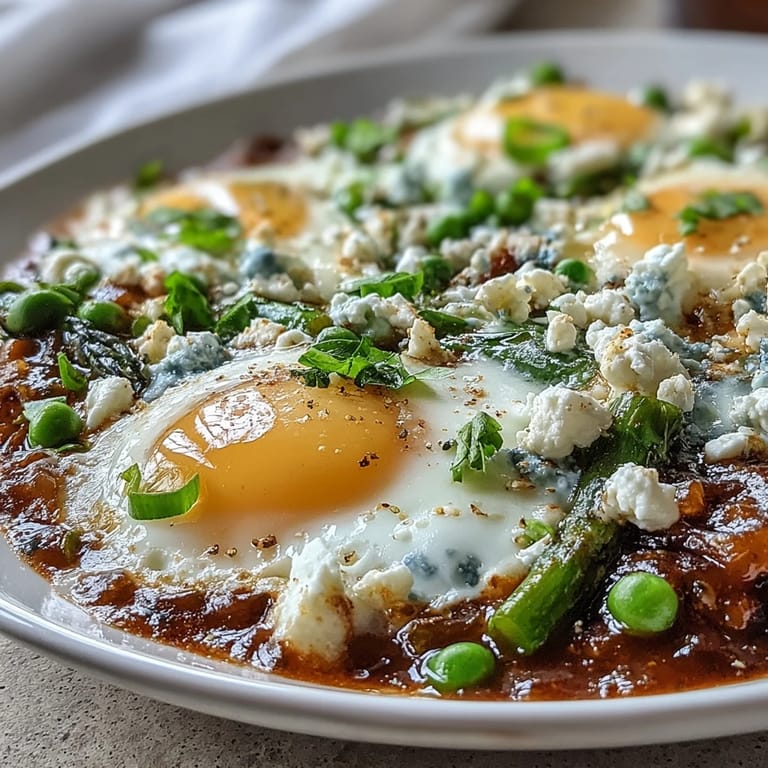
Save Spring arrived late one year, and I found myself staring at a farmers market bursting with young peas and broad beans, suddenly desperate to cook something that tasted like the season finally showing up. This shakshuka came together almost by accident, a green-heavy riff on the Middle Eastern classic that my family started requesting before I'd even finished cleaning up. What began as an experiment with whatever vegetables looked most promising became the recipe I reach for now whenever I want something that feels both comforting and alive.
I made this for a friend who'd mentioned being tired of the same egg breakfast rotation, and watching her scoop up a forkful of those creamy yolks with a piece of crusty bread felt like the highest compliment. She ate two helpings and asked for the recipe before she even left the table. That's the power of a good shakshuka: it doesn't try to be fancy, but somehow it always feels like a celebration.
Ingredients
- Fresh or frozen peas: I use frozen more often than not, and honestly, they're picked at peak ripeness so they taste just as bright as fresh; get them in an ice bath quickly after blanching so they stay vibrant green and tender.
- Broad beans: These need double-podding if you're using fresh ones, which sounds annoying but takes maybe five minutes and their creamy texture is entirely worth it.
- Asparagus: Cut into 2-inch pieces so they cook at the same pace as everything else; woody ends should be snapped off and discarded without guilt.
- Onion and red bell pepper: They soften into a gentle base that lets the spices and tomatoes do their thing.
- Garlic cloves: Fresh minced garlic will bloom beautifully once you add the spices, filling your kitchen with that unmistakable warm aroma.
- Canned chopped tomatoes: They provide body and acidity without requiring you to peel fresh ones, and honestly, they're reliably good year-round.
- Tomato paste: A tablespoon or two adds depth and helps thicken the sauce naturally.
- Ground cumin, smoked paprika, ground coriander: Together these spices build warmth and complexity without overwhelming the vegetables or eggs.
- Chili flakes: Optional but they introduce just enough heat to make you notice without making anyone uncomfortable.
- Eggs: Large eggs work best; they need enough surface area for yolks to stay runny while whites set.
- Feta cheese: Crumbled across the top at the end, it adds a salty, tangy contrast that makes every bite more interesting.
- Fresh parsley or mint: Either one works; mint feels especially springy, but parsley is more forgiving if you're not certain about flavor.
- Extra virgin olive oil: Not just for cooking but for that final drizzle, which ties everything together and makes the dish feel intentional.
Tired of Takeout? 🥡
Get 10 meals you can make faster than delivery arrives. Seriously.
One email. No spam. Unsubscribe anytime.
Instructions
- Blanch the spring vegetables:
- Bring a pot of salted water to a boil and drop in your peas and broad beans for just 2 minutes, then plunge them into an ice bath immediately. This stops the cooking and keeps them bright and firm; the ice bath is non-negotiable if you want them to taste spring-like rather than soft.
- Build your flavor base:
- Heat olive oil in a large deep skillet over medium heat, add your chopped onion and diced red bell pepper, and let them soften for about 5 minutes while you listen to them sizzle quietly. You want them tender but not brown; they're just creating a bed for everything else.
- Bloom the spices:
- Stir in your minced garlic along with the cumin, smoked paprika, coriander, and chili flakes if you're using it, cooking for just 1 minute until the whole kitchen smells warm and toasted. This brief cooking time wakes up the spices and keeps them from tasting raw or dusty.
- Create your tomato sauce:
- Add the tomato paste first, stirring it into the spices for a few seconds so it can caramelize slightly, then pour in your canned tomatoes and let everything simmer for about 10 minutes, stirring occasionally. The sauce will darken and thicken slightly, becoming richer and less watery.
- Add the vegetables and season:
- Fold in your blanched peas and broad beans along with the asparagus pieces, then taste and adjust with salt and pepper; simmer for 5 to 7 minutes until the asparagus is tender but still has a slight bite to it. The vegetables should feel like they're part of the sauce, not swimming in it.
- Nestle in the eggs:
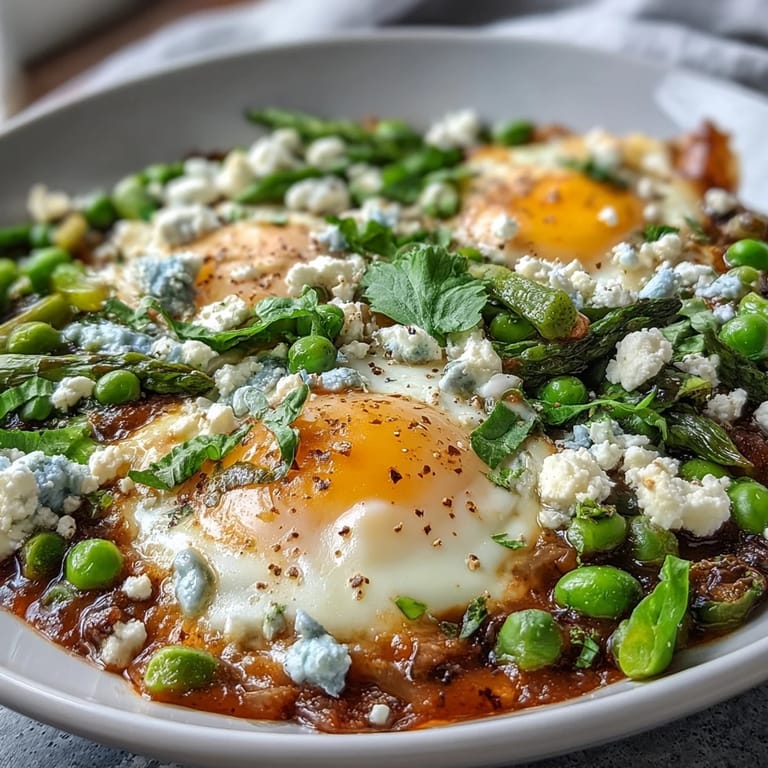
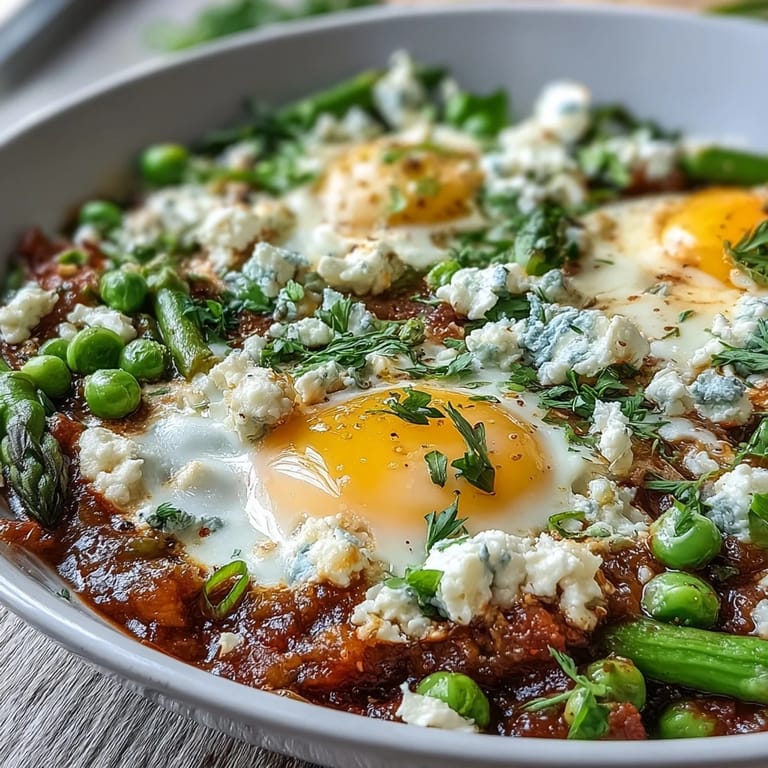
- Using the back of a spoon, make four small wells in the vegetable mixture, then carefully crack one egg into each well so the yolk sits in its own little nest. Cover the pan and turn the heat down to low, cooking for 7 to 10 minutes until the egg whites are set but the yolks still jiggle slightly when you give the pan a gentle shake.
- Finish and serve:
- Remove from heat, scatter crumbled feta and fresh herbs across the top, and drizzle generously with olive oil; serve directly from the pan with crusty bread so people can scoop and share.
 Save
Save 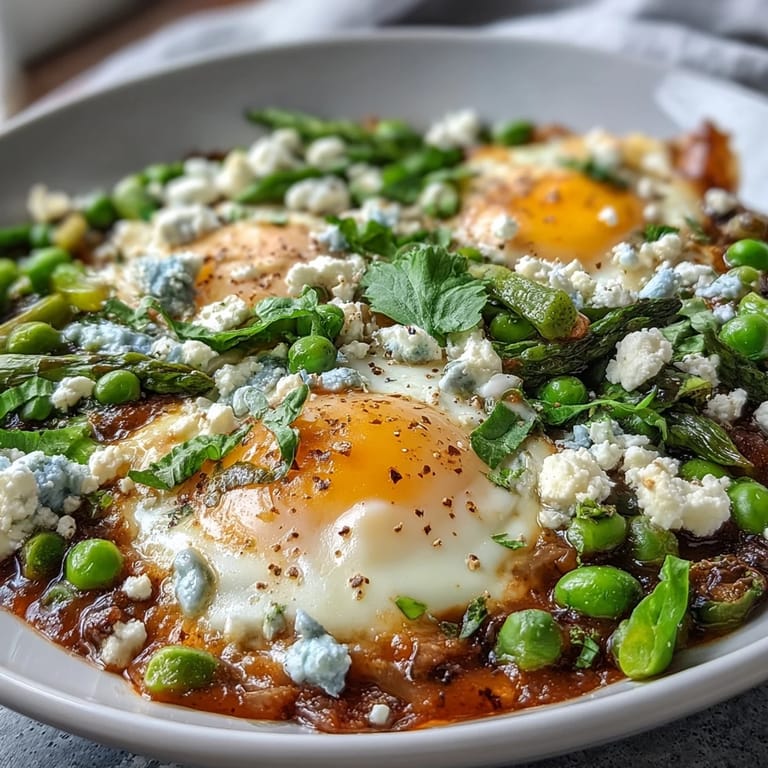 Save
Save There was a moment while making this recently when my daughter wandered into the kitchen, saw the pan full of green vegetables and runny eggs, and said, "This looks fancy but also like something I want to eat right now," which I think is the exact feeling this dish should give you. That's when I knew it was really done.
Variations and Swaps
This recipe is genuinely flexible, and I've made it with zucchini, spinach, fresh dill instead of parsley, and even a pinch of ground fennel when I was feeling adventurous. The bones of the dish—the spiced tomato sauce and the runny eggs—stay the same, but everything around them can shift depending on what's in your vegetable drawer or what you're craving that particular morning.
Serving and Pairing
Serve this directly from the skillet if you're eating with people who don't mind sharing from the same pan, or divide it gently into bowls if everyone wants their own. A crisp white wine, sparkling water with lemon, or even just strong coffee alongside feels right; the acidity cuts through the richness of the yolks while the coolness grounds all those warm spices.
Storage, Vegan Swaps, and Heat
Leftovers keep well in the refrigerator for about two days, though the eggs won't be quite as runny when you reheat them and that's simply the price of convenience. For a vegan version, omit both the eggs and feta, then stir in a drained can of chickpeas for protein and texture; it becomes a different dish but an equally satisfying one. If you want more heat, keep a bottle of harissa or chili oil nearby for anyone who wants to add their own kick without committing the whole pan to spice.
- Make the sauce the night before and reheat it gently before adding the eggs, which saves time on mornings when you're moving slowly.
- Toast some crusty bread or warm some flatbreads while the eggs cook so they're ready the moment you pull the pan from heat.
- If you can't find fresh broad beans, frozen ones work beautifully and save you the double-podding step entirely.
 Save
Save 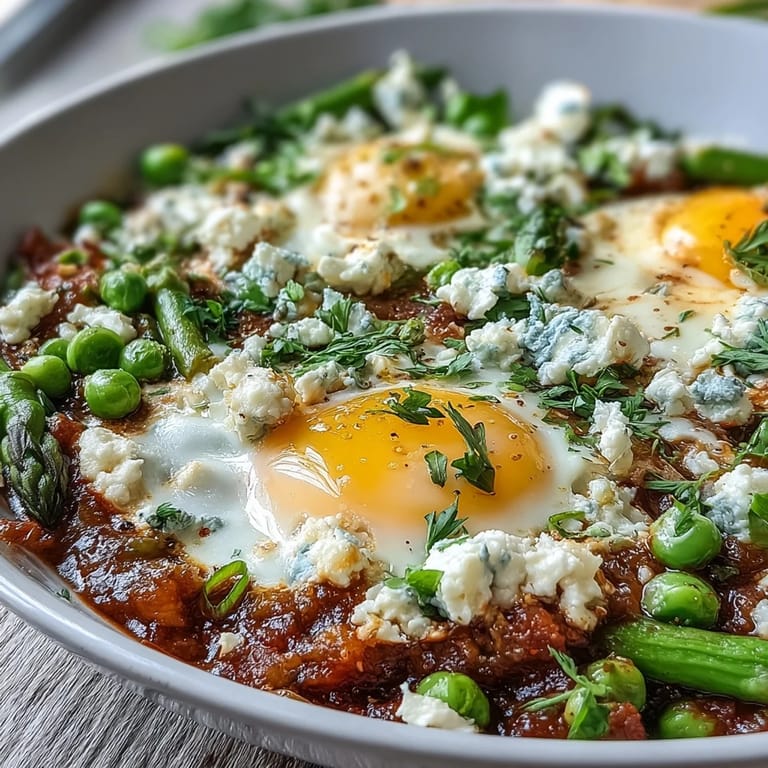 Save
Save This shakshuka has become my go-to answer when I want something that tastes vibrant and seasonal but doesn't require elaborate technique or a long list of obscure ingredients. It's the kind of food that brings people together around a single pan and makes everyone feel cared for.
Recipe FAQs
- → Can I use frozen vegetables instead of fresh?
Yes, frozen peas and broad beans work perfectly in this dish. They're already blanched, so you can add them directly to the tomato sauce without pre-cooking. For asparagus, fresh is recommended for better texture.
- → How do I know when the eggs are properly cooked?
The eggs are ready when the whites are fully set but the yolks remain runny, typically 7-10 minutes with the lid on. For firmer yolks, cook an additional 2-3 minutes.
- → What can I substitute for feta cheese?
Goat cheese, ricotta salata, or crumbled halloumi work well as alternatives. For a dairy-free version, nutritional yeast or vegan feta substitutes provide similar tangy flavor.
- → Can this be made ahead of time?
The tomato and vegetable base can be prepared up to 2 days ahead and refrigerated. When ready to serve, reheat the base and add fresh eggs, cooking until set.
- → What type of bread pairs best with shakshuka?
Crusty sourdough, warm pita, or fluffy flatbreads are ideal for scooping up the sauce and vegetables. For gluten-free options, use your favorite gluten-free bread or serve with rice.
- → How can I adjust the spice level?
Reduce or omit the chili flakes for a milder version. For more heat, add harissa paste to the tomato sauce or serve with chili oil on the side.