Save
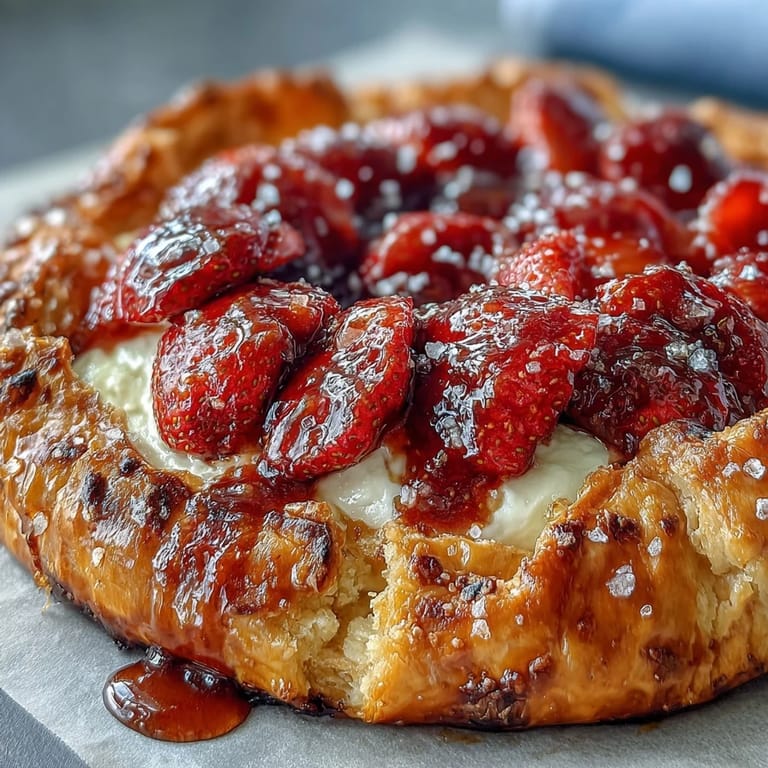
Save There's something about the way a galette comes together that feels less like baking and more like arranging beautiful things on pastry. I discovered this strawberry version on a Saturday morning when I had just enough time before guests arrived and exactly the right ingredients already chilling in my fridge. The magic isn't in perfection—it's in that rustic, slightly crooked edge and the way the almond cream cushions each sweet bite of fruit.
I once made this for my neighbor who had just moved in, and she cried a little when she tasted it—not because it was perfect, but because it was warm and homemade and someone had thought to bring it over. That's when I realized a galette isn't really about technique; it's about the gesture of setting fruit and butter on a table and saying, here, this is for you.
Ingredients
- All-purpose flour (1 1/4 cups): This is your structure, and cold hands matter more than exact measurements, so don't stress if you're a bit over or under.
- Unsalted butter, cold and cubed (1/2 cup): Keep it genuinely cold from the fridge, and those small pieces will create the flaky layers that make pastry worth eating.
- Ice water (3–4 tbsp): Add gradually because humidity in your kitchen affects how much you'll actually need, and damp dough is sadder than dry dough.
- Almond flour (1/2 cup): This is what separates a basic galette from one that tastes like you know secrets, so don't skip it or substitute with something else.
- Granulated sugar (2 tbsp for frangipane, 2 tbsp for strawberries): The strawberry sugar draws out juice and creates a light syrup that pooling around the edges looks restaurant-worthy.
- Softened butter (2 tbsp): This needs to be actually soft, not melted, so it blends smoothly with the almonds and egg.
- Fresh strawberries (2 cups, hulled and sliced): Choose berries that smell like strawberries, not like the plastic they came in, because taste starts with your nose.
- Cornstarch (1 tbsp): This prevents the galette from turning into a soggy situation while it bakes, which is the real MVP moment.
- Lemon juice (1 tsp): A whisper of acid brightens the strawberries and prevents that flat sweetness.
- Milk or cream (1 tbsp for brushing): This creates that beautiful golden sheen, though water works if that's what you have.
- Coarse sugar (1 tbsp for sprinkling): Those larger crystals catch light and add texture that regular sugar can't.
Tired of Takeout? 🥡
Get 10 meals you can make faster than delivery arrives. Seriously.
One email. No spam. Unsubscribe anytime.
Instructions
- Make the pastry dough:
- Combine flour, sugar, and salt in a bowl, then work in the cold butter with your fingertips until the mixture looks like rough breadcrumbs with some pea-sized pieces still visible. Add ice water one tablespoon at a time, stirring gently until the dough barely holds together—overworking it now means tough pastry later.
- Chill the dough:
- Shape the dough into a disk, wrap it tightly in plastic wrap, and let it rest in the fridge for at least 30 minutes, though overnight is even better if you're thinking ahead.
- Prepare the frangipane:
- In a small bowl, blend the softened butter and almond flour together, then add the sugar, egg, vanilla, almond extract if using, and salt until the mixture is smooth and creamy. This should take about a minute of gentle stirring.
- Season the strawberries:
- Toss the sliced strawberries with sugar, cornstarch, and lemon juice, then let them sit for a few minutes so they start releasing their juices.
- Heat the oven:
- Preheat to 400°F and line a baking sheet with parchment paper, which prevents sticking and makes cleanup actually pleasant.
- Roll and transfer the pastry:
- On a lightly floured surface, roll the chilled dough into a roughly 12-inch circle—rustic means it doesn't have to be perfectly round. Transfer it carefully to your parchment-lined sheet.
- Spread the almond cream:
- Using an offset spatula or the back of a spoon, spread the frangipane evenly over the dough, leaving a 2-inch border all the way around that will fold up and frame the filling.
- Arrange the strawberries:
- Layer the strawberries and any juice that's accumulated over the frangipane, arranging them so they look intentional but not fussy.
- Fold and seal the edges:
- Gently fold the pastry border up and over the filling, pleating it as needed in overlapping folds that look naturally imperfect. Brush everything with milk or cream and sprinkle the coarse sugar over the exposed pastry.
- Bake until golden:
- Bake for 35–40 minutes until the crust is deep golden and the strawberry filling is bubbling slightly at the edges, which is when you know the fruit is cooked through but still bright.
- Cool and serve:
- Let it rest for 5–10 minutes so the filling sets slightly, then slice and serve warm or at room temperature with whipped cream or vanilla ice cream if you're feeling generous.
 Save
Save I've burned the edges and had filling bubble over, and somehow it still tasted like someone cared enough to make it. That's the real secret of a galette—it's forgiving in a way that makes you feel like a baker even when things don't go exactly to plan.
Why Rustic Pastry is Actually an Advantage
The beauty of a galette is that it doesn't demand perfection, which means you can actually enjoy making it instead of stress-baking with a tight jaw. Uneven edges, visible pleats, and asymmetrical fruit arrangement all read as intentional and charming rather than mistakes, so let go of the idea that homemade means impeccably uniform.
Timing and Temperature Matter More Than You'd Think
The oven at 400°F is hot enough to set the pastry and caramelize the edges before the fruit releases too much liquid, creating a window of perfect baking where everything happens at once. If your oven runs cold, the pastry might need a few extra minutes, but watch for that golden brown rather than trusting time alone.
Variations That Work and Why
Once you've made this version, you'll start seeing galettes everywhere—in your head, with raspberries, with peaches, with cherries and a splash of brandy. The frangipane base is flexible enough to let whatever fruit you're holding shine, and the technique stays exactly the same no matter what you're arranging on top.
- Swap the strawberries for blackberries or raspberries without changing the method, though you might use a touch less cornstarch since those berries are naturally less juicy.
- Try stone fruits like peaches or plums sliced thin, which pair beautifully with almond and bring a different richness to the galette.
- For a nut-free version, omit the frangipane entirely and spread a thin layer of apricot jam or lemon curd in its place, which gives you the same cushioning effect without almonds.
 Save
Save There's something deeply satisfying about pulling a galette from the oven when it's still bubbling at the edges and the kitchen smells like toasted almonds and warm fruit. Serve it while it's still a little warm, and watch people light up when they realize this came from your hands.
Recipe FAQs
- → What type of flour is used for the pastry?
All-purpose flour is used to create a tender, flaky pastry dough for this galette.
- → Can I substitute the almond frangipane?
Yes, for a nut-free alternative, omit the frangipane and spread a thin layer of jam before adding the fruit.
- → How should the strawberries be prepared?
Strawberries are hulled, sliced, then tossed with sugar, cornstarch, and lemon juice to enhance flavor and thicken the filling.
- → What is the baking temperature and time?
Bake the galette at 400°F (200°C) for 35–40 minutes until the crust is golden and the filling bubbles.
- → Can this dessert be served cold?
It is best served warm or at room temperature to enjoy the full flavors and flaky texture.